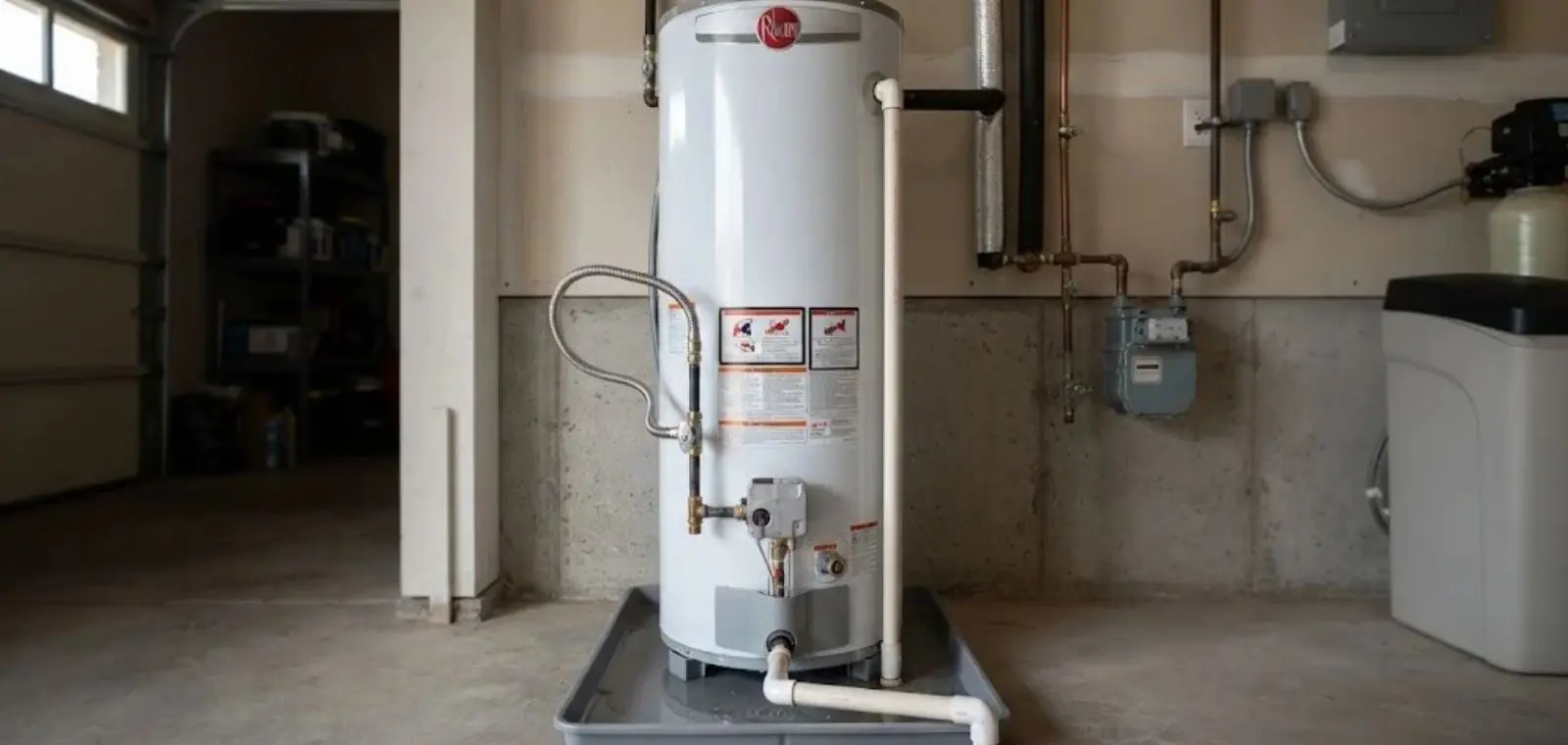
A failed water heater can release the whole tank onto the floor, which is a lot of water in a basement. If the tank is leaking, close the cold water valve above it, cut power at the breaker or turn the gas control to off, and call our 24/7 line. If you smell gas, leave the building and call the gas utility first. A dispatcher will help you with the next steps.
Emergency replacement: how to tell the tank is finished
- Water pooling under the tank, not from a pipe or valve
- Rust-colored water from only the hot tap
- A tank more than ten to twelve years old with repeated repairs
- Popping or rumbling that returns right after a flush
- A scorched or sooty flue on a gas unit
Once a steel tank rusts through, there is no patching it. If your heater is leaking from the body, the quickest route to hot water is a replacement, and the visit starts with confirming that the water is coming from the tank.
What replacement involves
The plumber shuts off and drains the old heater, disconnects the water lines, venting and fuel or power, removes the unit and brings in the new one. The new tank is set in a drain pan where the space allows, connected with new flexible lines and valves, vented and tested. Fuel connections are leak-tested and the relief valve and its discharge pipe are checked.
| Type | Strengths | Consider |
|---|---|---|
| Standard tank, gas or electric | Lowest upfront cost, fast to install | Tank life is limited and standby heat loss is higher |
| High-efficiency or condensing gas | Lower fuel use | Needs specific venting and a drain for condensate |
| Heat pump (hybrid) electric | Uses much less electricity | Needs space, airflow and a condensate drain |
| Tankless | Endless hot water, small footprint | Higher install cost, needs scale maintenance, see tankless water heater |
Hard water, anodes and the life of the new tank
Columbus reports that it softens water to an average of 120 parts per million, about 7 grains per gallon. That is moderately hard, and it forms scale that coats heating elements and settles at the bottom of tanks. A new tank lasts longer if it is flushed once a year and the anode rod is checked every few years. We explain that on the visit and leave you with the schedule.
Some customers pair a new heater with a water softener. That is a choice, not a requirement, and water softener and filtration explains what it does and does not do for a heater.
Permits, code and what we handle
The city of Hilliard states that plumbing work needs a permit, and that every contractor working in the city must be registered with the Building Department. We tell you on the visit how the permit is handled for your address, and we leave the old unit hauled away. Ask whether the quote includes disposal, a new relief valve and an expansion tank where one is needed.
Insurance and a flooded basement
Sudden tank failure is often covered, though the cost of the heater itself usually is not. Photograph the leak before cleanup, keep the old tank until your adjuster says otherwise and ask your insurer about water damage restoration.
What drives the price of a replacement
- Fuel type and the capacity you choose
- Venting changes, gas line modifications and electrical work
- Code items such as an expansion tank, drain pan and discharge pipe
- Access, stairs and basement layout
- After-hours dispatch for an urgent failure
You get a clear price before work starts. If you are replacing a tank that is not leaking yet, we can schedule the work at a time that suits you.
The line is answered 24/7, and same-day appointments are offered when available.
If you are not sure the heater has failed, water heater repair tests it first. For a planned upgrade, water heater installation covers sizing and fuel choices.
What to do before the crew arrives
- Turn off the cold water supply to the tank and switch off the power or gas control
- Do not touch hot discharge piping, and keep children away from the heater
- Clear a path to the heater and a few feet around it
- If you smell gas, leave the building and call the gas utility from outside
Code references for this work
A replacement tank is installed with a relief valve and discharge pipe as the International Plumbing Code (IPC) requires, and Ohio's plumbing code is based on it. Electric units follow the National Electrical Code (NEC).
Questions we hear from callers
Yes. The line is answered 24/7. A failed tank is urgent, and we offer same-day appointments when available. We cannot promise an arrival time.
A like-for-like tank swap usually takes a few hours. Changing fuel types, venting or moving the heater takes longer.
If it is past ten to twelve years or has a history of leaks, yes. A planned replacement avoids the cost of a flood and an emergency call.
Often. It depends on the electrical service, the space and your fuel costs. We talk through it during the visit.
It reduces scale buildup, which can extend element and tank life. It does not remove the need for periodic flushing or anode checks.
Yes. Removal and disposal is part of the visit unless you tell us otherwise.