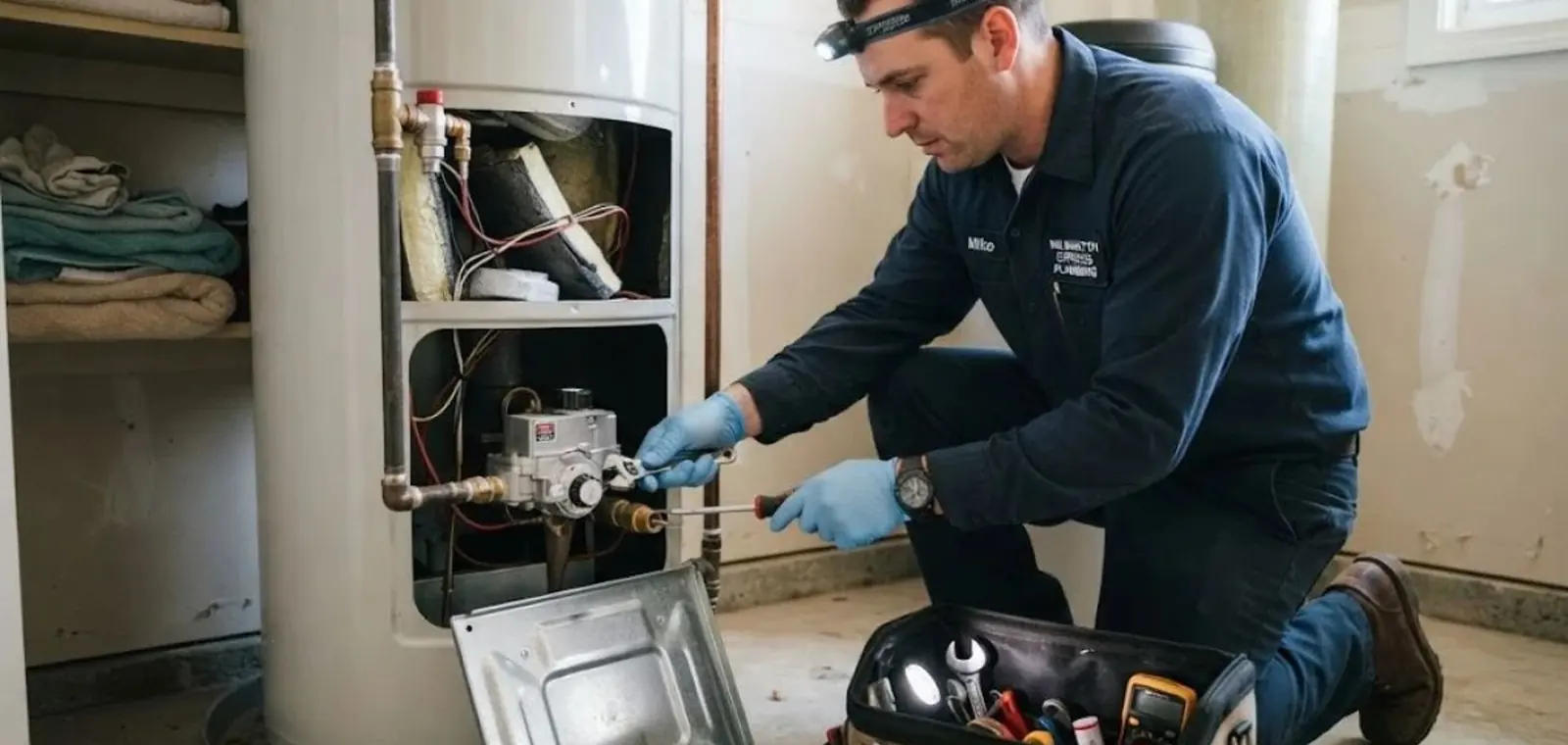
Installing a water heater is a planning job. It goes best when you pick the size, fuel and location before the old tank fails, and when the venting, gas, electric and drain details are checked in advance. Call the same 24/7 line to schedule, and a dispatcher will book the earliest appointment that suits you.
Sizing a water heater for your household
Size comes from how much hot water you use at the same time, not from the house size. A family that runs a shower, a dishwasher and a washer together needs more recovery than a couple that does not. A tank that is too small runs out. One that is too large wastes energy keeping water hot.
| Household | Common tank range | Notes |
|---|---|---|
| 1 to 2 people | 30 to 40 gallons | Consider tankless to save space |
| 3 to 4 people | 40 to 50 gallons | Look at the first hour rating, not just volume |
| 5 or more, or a large tub | 50 to 80 gallons | A high recovery gas unit or a tankless may suit better |
Those are starting points. We confirm with the fixture count and your habits.
Gas, electric, heat pump or tankless
Gas heats water fast and costs less to run in many homes, but it needs venting and a gas line. Electric tanks are simple and need a 240-volt circuit. Heat pump models use a fraction of the electricity but need open space and air. Tankless units need a sized gas line or a large electric service. Each choice affects what else must be done.
What the install includes
- Draining and removing the old unit, if there is one
- New water connections, shutoff valves and flexible lines
- Venting checked or replaced to suit the unit
- A relief valve and discharge pipe that meet the manufacturer's requirements
- An expansion tank where the system is closed
- A drain pan and, where appropriate, a drain to a floor drain or sump
Expansion tanks and closed systems
When a water meter or a pressure-reducing valve closes the supply side, thermal expansion has nowhere to go. Pressure rises each time the heater cycles, which strains valves and the heater itself. An expansion tank gives the water a place to go. It is a small part with an outsized effect on the life of the heater, and we ask about it on every install.
Check the pressure
If the faucets bang or the relief valve drips after a heating cycle, thermal expansion may be the cause. A pressure gauge on a hose bib tells you the static pressure in minutes.
Permits and registered contractors in Hilliard
The city's Building Standards Division says plumbing work needs a permit, and contractors working in the city must be registered with the Building Department. You can verify a registration through Hilliard 311. We confirm the permit requirements at scheduling, not after the work.
What drives the price
- Type and capacity of the heater
- Venting, gas line or electrical work
- Access and the distance to the old connections
- Permit and disposal of the old unit
A clear price comes before the work. If the heater is old and you want to compare repair versus new, ask for both numbers.
Call and tell the dispatcher what you want. We book the earliest appointment that fits.
For a failed tank, water heater replacement is the faster route. For high-demand homes, see tankless water heater. If you are remodeling, plumbing installation covers the rest.
Questions we hear from callers
It depends on peak use. A tank sized to the first hour rating that matches your busiest hour is more important than the nameplate gallons.
Often yes, when the supply side is closed by a meter or a pressure regulator. We check the line pressure and tell you.
Yes, though it adds piping, venting and sometimes electrical work. We quote it on site.
The city states that plumbing work needs a permit. We confirm the exact requirement for your address before we start.
A straightforward tank swap takes a few hours. A change of fuel or venting takes longer and may need a second visit.
Yes. The same line is answered 24/7 for urgent failures, and the earliest appointment available is booked.