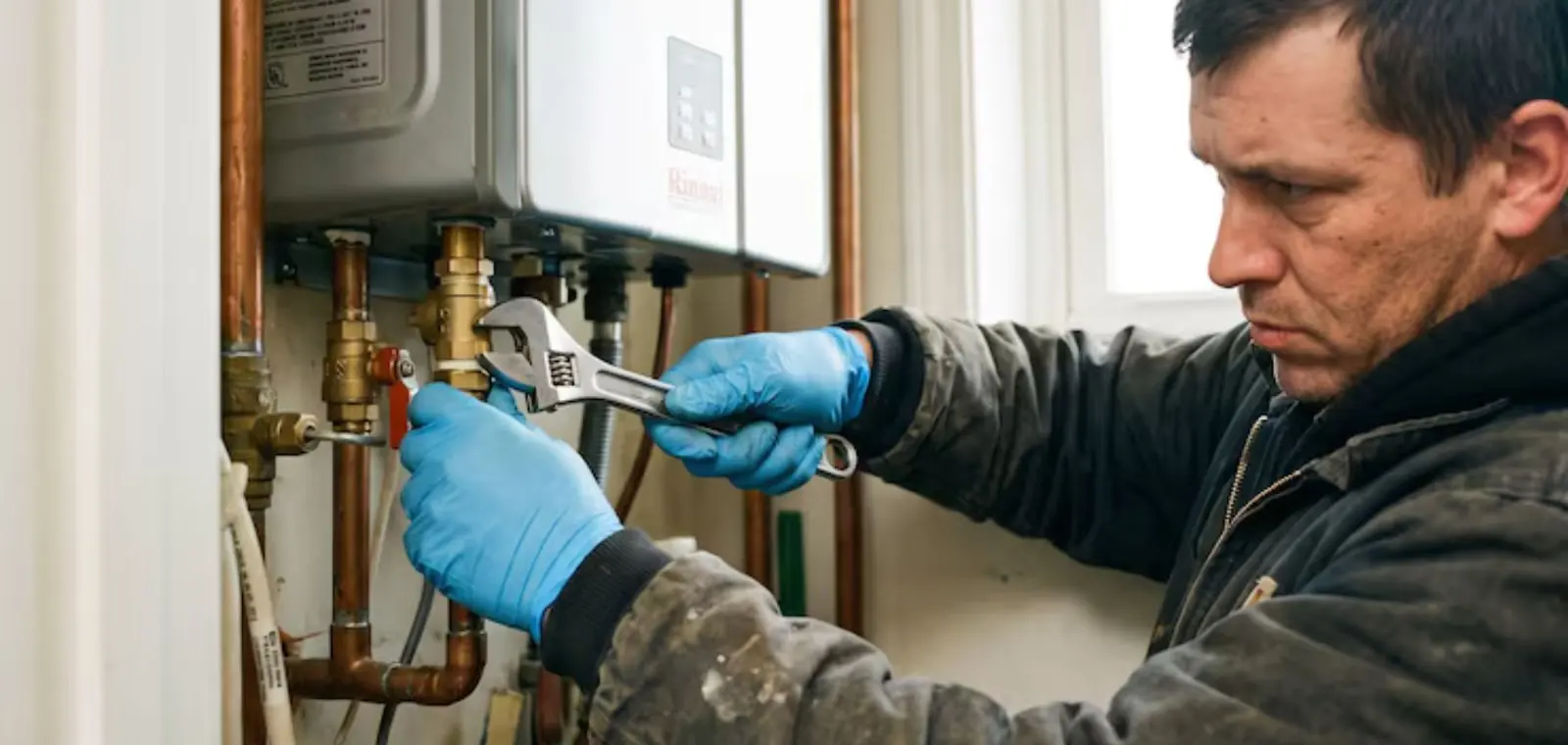
No hot water is an inconvenience, but a leaking tank is an emergency. If water is pooling around the heater, turn off the cold water supply valve on the pipe above it. Then switch off the power at the breaker for an electric unit, or turn the gas control to pilot or off for a gas unit, and call the 24/7 line. Keep children and pets away from standing water near any electrical connection.
Emergency or not: leaks, cold water and noises
Most calls begin with one of four symptoms. Each points toward a different part, and the cost of the fix swings widely between them.
| Symptom | Common cause | Repair or replace |
|---|---|---|
| Water at the base of the tank | Corroded tank or a failed drain valve | Tank leaks mean replacement. Valve leaks can be repaired. |
| No hot water, electric unit | Failed heating element or thermostat | Usually repair |
| No hot water, gas unit | Pilot, thermocouple or gas valve | Usually repair |
| Rumbling or popping when heating | Sediment hardened on the tank floor | Flush now, replace if the tank is old |
| Water from the relief valve pipe | Pressure or temperature too high | Test the valve and the expansion tank |
Why sediment is a bigger problem in Hilliard
Columbus, which supplies Hilliard properties, reports that it softens its water to an average of 120 parts per million, roughly 7 grains per gallon. That is moderately hard. Minerals precipitate out when water is heated and settle at the bottom of a tank. Over a decade the layer insulates the water from the burner or element, which raises the cost of every shower and shortens the life of the tank.
A yearly flush slows that buildup, and checking the anode rod tells you how much of the tank's protection is left. If the heater is more than ten years old and the rod is gone, we will say plainly that a repair may only buy you a few months, and show you the water heater replacement option beside it.
What a repair visit includes
- Testing the thermostat, heating elements or gas control before replacing anything
- Checking the temperature and pressure relief valve and the discharge pipe
- Looking at the shutoff valves, the expansion tank and the venting on gas units
- A written explanation of what failed, what is worn and what is next to go
Parts are replaced only when testing shows they failed. You get a clear price before work starts, and you decide whether to go ahead.
Gas, electric and tankless: different repairs
Gas heaters rely on a pilot or igniter, a thermocouple and a flue that draws properly. If you ever smell gas, leave the house and call the gas utility before calling us. Electric heaters have two elements and thermostats that fail one at a time, so a heater that runs out of hot water fast may only have lost one element.
Tankless units fail differently. Scale builds up inside the heat exchanger, and error codes appear. A descale flush often restores them, and the tankless water heater page covers that work.
Hot water and safety
Water above about 120 degrees Fahrenheit can scald in seconds, especially for small children. If you adjust the thermostat yourself, do not set it higher than needed, and let the plumber reset it if you are unsure.
Cost factors and permits
The price depends on the part, how easy the heater is to reach and the time of the call. After-hours dispatch carries a premium. Replacing a heater can need a permit in Hilliard, since the city states plumbing work requires one and registers its contractors, so ask us how that is handled before you agree to a replacement.
Call the 24/7 line. We will walk you through the shutoff and book the earliest appointment available.
If the heater is only a few years old and the problem is a trip, a repair is usually right. If you are comparing options, see water heater installation for sizing and fuel choices, and leak detection if the wet spot may not be coming from the tank.
Questions we hear from callers
Yes. The line is answered 24/7. A leaking tank is treated as urgent, and a heater that only lost hot water is scheduled for the earliest appointment available, same day when possible.
Dry the area, then watch it. Drips from the top pipes or the relief valve point to a fitting or valve. Water spreading from underneath the tank itself points to the tank, and that means replacement.
Sediment on the tank floor traps water that boils and bursts. A flush helps if the tank is sound. A tank more than ten years old with heavy scale may fail soon after.
With the moderately hard water Columbus reports, a yearly flush is a sensible interval. Ask us on any visit, since we can check the anode rod at the same time.
It depends on the failed part. A thermostat or element on an otherwise clean tank is often worth fixing. A leak, heavy corrosion or a rusted base means the money is better spent on a new unit.
The city says plumbing work needs a permit, and contractors must be registered. Rules vary by project, so we confirm with the Building Standards Division before replacing a tank.