An active leak is an emergency when water is coming through a ceiling, spreading across a floor or running with nobody home. Call the 24/7 line, shut off the main water valve if you can reach it, and move belongings away from the wet area. If the ceiling is bulging, stay out from under it, because a bulge can drop plaster and water at once.
Start with the water meter
Shut off every tap and appliance that uses water, then look at the meter. If the small dial or flow indicator still moves, water is leaking somewhere between the meter and your fixtures. If the meter is still, the leak is likely downstream of a fixture that opens only when used, or it is a drip that needs a longer test.
Columbus is replacing meters at some Hilliard properties as part of its Enhanced Meter Project, which began in mid-June 2026. Most meters are indoors, installation is free and water can be shut off for a short time. After a swap, a ten-minute check of the connections and the dial is a good habit. Higher bills after a new meter do not always mean a leak, but a moving dial with everything off always does.
Where hidden leaks usually are
| Where | Common clue | Typical cause |
|---|---|---|
| Behind a wall or ceiling | Stain, bubbling paint, a musty smell | Supply joint or drain trap |
| Under a slab or basement floor | Warm spot, sound of running water | Pressurized line in or below concrete |
| Crawlspace or basement | Damp joists, mold on the floor above | Supply line or old drain joint |
| Between meter and house | Meter moves, wet lawn or soft ground | Service line break |
| Irrigation or yard | Soggy patch, high summer bill | Buried irrigation fitting |
Pinpointing the leak before cutting anything
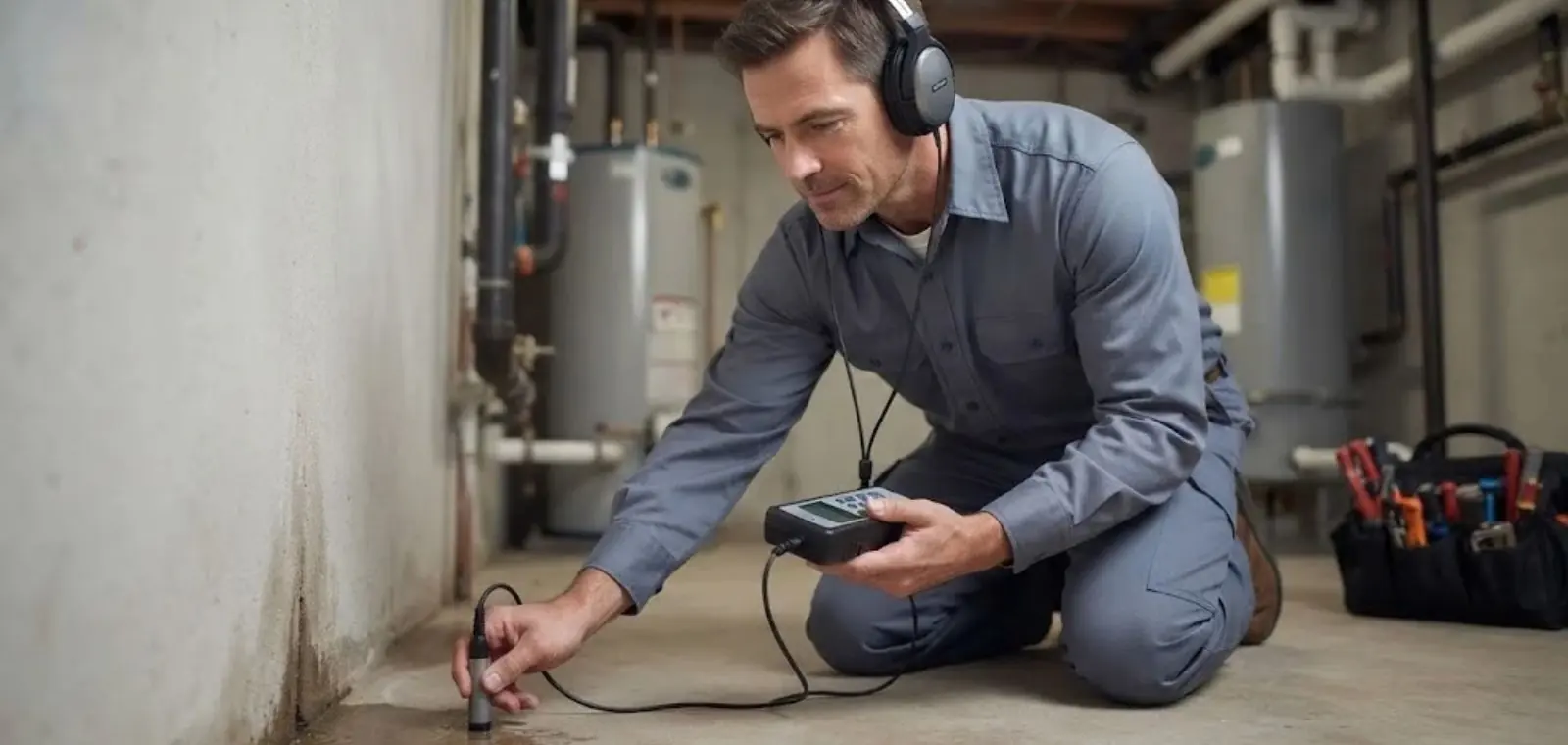
Opening a wall to look is the most expensive way to find a leak. A plumber can narrow it with a pressure test that isolates each line, acoustic listening gear that picks up the sound of escaping water through a surface, a moisture meter on the suspect wall and thermal imaging for warm lines. The goal is one small opening in the right place.
- Pressure test to learn which line is losing water
- Acoustic listening on the floor, wall or exposed pipe
- Moisture and thermal readings to confirm the wet area
- A short written finding that you can show your insurer
Slab leaks and under-floor leaks
Water under concrete announces itself with a warm patch, a constant hiss or a bill that creeps up with no obvious reason. Hot lines in a slab can be rerouted overhead rather than broken out, which is often cheaper than opening the floor. Ask for both options, since the right answer depends on access and the age of the piping.
Wet ceilings and walls: when a leak is an emergency
A ceiling stain under a bathroom usually traces to a shower valve, a drain connection or a supply line above. A stain below a kitchen can mean the same, or a dishwasher or ice maker line. In basements and crawlspaces, check for drips on joists and rust at old joints, since a slow leak can run for months.
What your insurer will want
Take photos before cleanup and keep any damaged materials until the adjuster has seen them. Many policies cover sudden damage but not the cost of finding or repairing a long-running leak, so ask early rather than assuming.
What drives the cost of leak detection
- How many lines must be isolated and tested
- Whether the leak is under concrete, behind tile or in the yard
- Whether a repair follows the finding on the same visit
- After-hours dispatch for an active leak
You get a clear price before work starts. If the repair is a simple valve or fitting, we can often fix it the same visit.
Call the 24/7 line and we will help you narrow it down while you wait.
When a leak is in a buried line, see water line repair. When a pipe has burst, burst pipe repair covers the first steps. You can also read how the Dublin side of our service area is handled on the Dublin emergency plumber page.
What to do while you wait for a leak visit
- Close the main water valve if water is actively escaping
- Stay clear of wet outlets, fixtures and ceilings, and cut power only from a dry spot
- Photograph the stain, the meter reading and the date for your insurer
- Do not cut open a wall on a guess, because the source is often several feet away
Code references for this work
Once a leak is located, the repair has to meet the material and joint rules of the International Plumbing Code (IPC), which Ohio's plumbing code is based on.
Questions we hear from callers
Yes. The line is answered 24/7. An active leak is booked as urgent and we cannot promise an exact arrival time, but we will tell you what to shut off while the crew is on the way.
Water is escaping somewhere past the meter. Toilets, irrigation and a water heater relief valve are common culprits. A pressure test and a listening check narrow it down.
Usually yes. Pressure testing, acoustic listening and moisture or thermal readings narrow the spot to a small area, so the opening is limited.
A warm patch of floor, the sound of running water with everything off and a rising bill suggest a slab leak. Stains on a wall or ceiling suggest a leak above the finished surface.
Coverage varies. Sudden accidental damage is often covered, while long-term seepage often is not. Read your policy or ask your insurer, and keep photos and our written finding.
Yes, as part of a service line or irrigation check. We look for a drop in pressure on the buried line, then follow the line to the soft or wet patch.