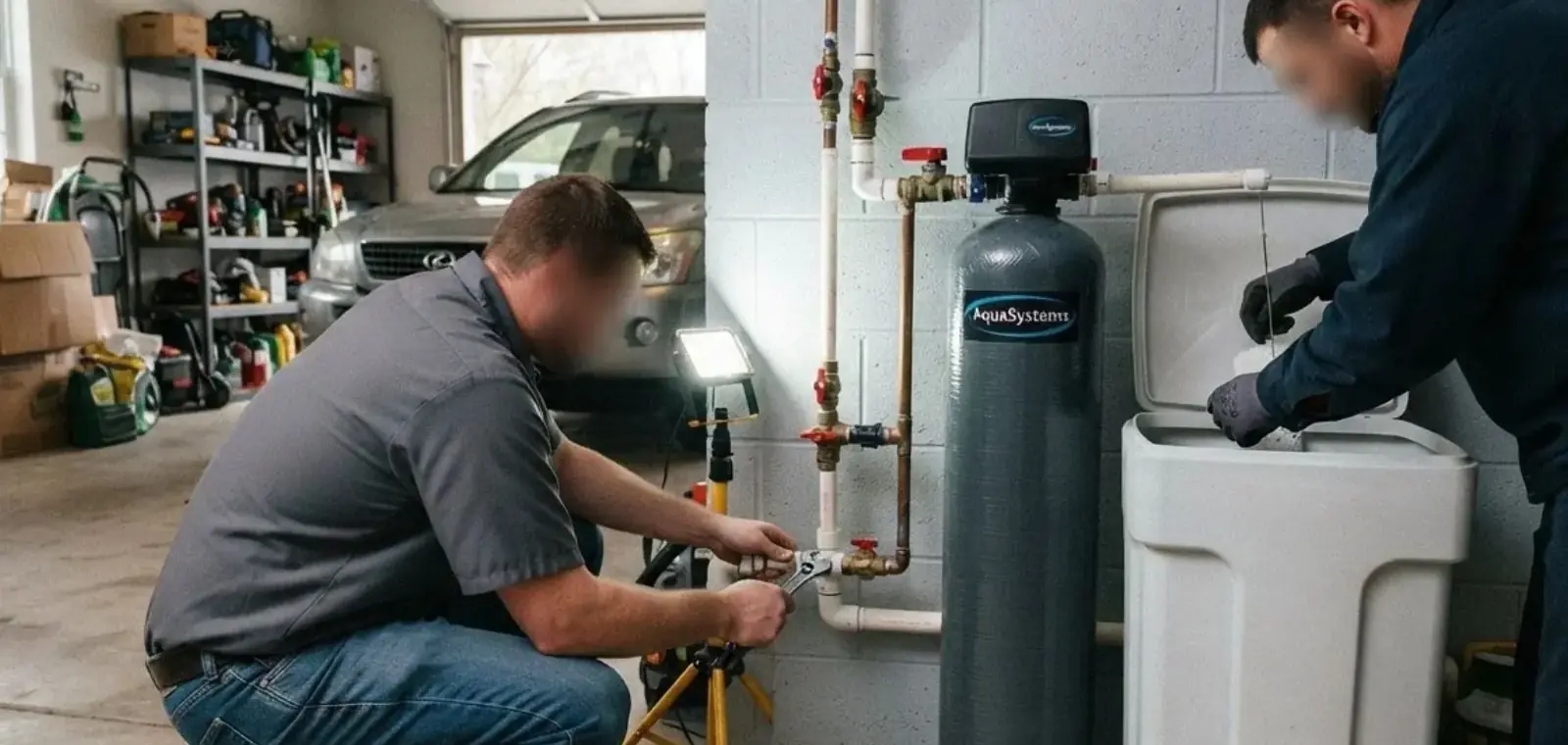
Water softeners and filters are planned installs. They solve different problems, and the first step is to know what is in your water. Call the line to schedule a visit, and a dispatcher will book the earliest appointment that fits. If a softener is leaking or has flooded the floor, close the bypass valve and call the 24/7 line.
What Columbus reports about its water
Columbus, which supplies Hilliard properties, states that it softens its water to an average of 120 parts per million, or about 7 grains per gallon. That is moderately hard, and it explains the white scale on fixtures and glassware, the crust on shower heads and the sediment in water heater tanks. Columbus also publishes an annual water quality report, and it is the right place to check any specific contaminant.
Softener or filter: which problem are you solving
| Device | Removes or changes | Does not do |
|---|---|---|
| Salt-based softener | Calcium and magnesium that cause scale | Remove chlorine taste or most contaminants |
| Carbon filter | Chlorine taste and odor | Soften water |
| Reverse osmosis at one tap | Many dissolved solids for drinking | Treat the whole house |
| Sediment filter | Particles and grit | Soften or improve taste |
Choose by the problem you have. Scale points to a softener. Taste and smell point to carbon. A specific health concern points to a test and the guidance of a qualified water professional.
Sizing and installing a softener
- Hardness and household size set the capacity
- Location near the main line, a drain and an outlet
- A bypass valve so you can isolate the unit
- A drain connection for the regeneration cycle that is trapped and air-gapped
- Plumbing to keep the outdoor spigots and a kitchen cold tap on unsoftened water if you prefer
What a softener does for your plumbing
Scale narrows pipes, coats heating elements and shortens appliance life. Softening reduces it. It can help a water heater and a tankless unit last longer, though neither replaces a periodic flush. It does not stop corrosion of old steel pipe.
Certification and honest claims
Look for softeners tested to NSF/ANSI Standard 44 and filters tested to the standard that matches the claim, such as NSF/ANSI 53 for contaminant reduction or 58 for reverse osmosis. We do not make health claims about drinking water. For that, ask your physician or the water utility.
What affects the price
- The system type and capacity
- Plumbing changes to reach the main and a drain
- Whether salt delivery or a smaller bag system fits your space
- Permit and disposal if you are replacing an old softener
You get a clear price before work starts. If you already have a softener that has stopped working, we diagnose before replacing.
Salt, water use and upkeep
A salt-based softener regenerates on a schedule and uses salt and some water each cycle. The brine tank needs refilling every few weeks, and bridged salt that forms a crust should be broken up. Wash-down and iron-removal products can extend resin life when the water has iron in it, and the water report tells you whether that applies. Keep the bypass valve accessible, and write the date of the last service on the unit so the next visit starts from a record.
Call to schedule. We book the earliest appointment that fits.
Hard water shortens heater life, which is covered in water heater repair and tankless water heater. For new plumbing around a softener, see plumbing installation.
What to do before an install visit
- Find the main water shutoff and make sure it turns
- Clear the area where the softener will sit, and note the nearest drain and outlet
- Pull your latest Columbus water quality report so the plumber can size the unit
- Do not add salt or media to an old unit that is leaking, and call us instead
Water softener questions
Columbus, which supplies Hilliard properties, reports an average of 120 parts per million, about 7 grains per gallon, after its own softening. That is moderately hard.
Not necessarily. If scale on fixtures and shortened appliance life bother you, a softener helps. If you only dislike the taste, a carbon filter may be enough.
A softener changes hardness. It does not make water safer. For health questions, see the utility's water quality report or talk to a physician.
Yes. It needs salt, an occasional cleaning of the brine tank and a check of the settings.
Yes. Plumbing can be set up so the kitchen cold tap and the outdoor spigots stay on the unsoftened line.
Yes. Close the bypass valve and call. The line is answered 24/7.