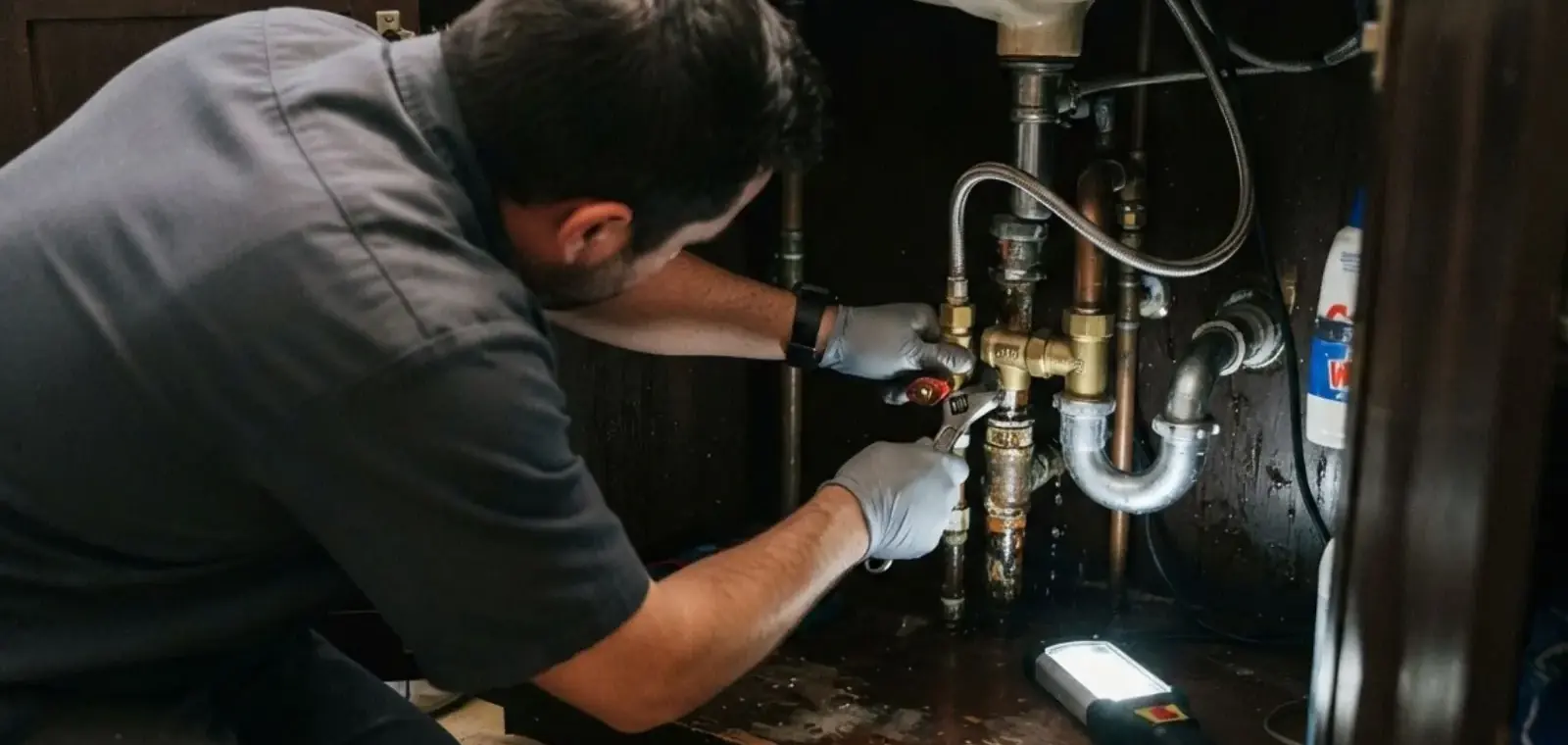
Plumbing installation covers anything new: a fixture, a room, a laundry hookup or the rough-in for a remodel. It is planned work, and the best results come from deciding the layout before the walls are open. Call the line to schedule, and a dispatcher will book the earliest appointment that fits.
What we install
- Toilets, sinks, faucets and vanities
- Tubs, showers and shower valves
- Washing machine boxes and utility sinks
- Garbage disposals and dishwasher connections
- Outdoor spigots and frost-free hose bibs
- Water lines and drains for basement bathrooms and bars
Rough-in: the part you do not see
In a remodel, the plumbing goes in before drywall. The rough-in sets the drain slope, the vent connection and the supply stub-outs at the exact heights that the finished fixtures require. A mistake here means opening the wall later. We confirm fixture models and dimensions before cutting.
| Decision | Why it matters | Plumbing impact |
|---|---|---|
| Moving a toilet or tub | Drain slope and vent reach | May need floor or ceiling work |
| Adding a basement bath | Drain below the main line | May need a sewage ejector pump |
| New shower valve | Wall depth and valve type | Rough-in set before tile |
| Tankless or larger heater | Gas, vent and flow | May need a bigger gas line |
Basement bathrooms and the ejector pump
A basement drain that sits below the main sewer line cannot flow by gravity. A sewage ejector pump in a sealed basin lifts waste up to the main drain. It must be vented and fitted with a check valve, and it is a part you should have inspected every few years.
PEX, copper and PVC
Most new supply lines today are PEX or copper, and drains are PVC or ABS depending on code and location. We use the material that suits the job and the inspection requirements. In older Hilliard houses, where galvanized or cast iron remain, we often connect new work to the existing pipe with proper transitions.
Permits
The City of Hilliard states that plumbing work needs a permit and that contractors must be registered with the Building Department. Homeowners can do their own work on their own residence, but permits and inspections still apply. We handle the permit for the work we do and tell you what inspections follow.
What affects the price
- Number of fixtures and their locations
- Distance to the existing supply and drain lines
- Opening and patching walls or floors
- Fixtures you supply versus those we source
- Permit and inspection
You get a clear price before work starts. If you are supplying your own fixtures, show us the model numbers in advance.
Laundry rooms, outdoor spigots and utility work
Laundry hookups need a standpipe or a washer box at the right height, a drain that can handle the discharge and shutoff valves you can reach. Outdoor frost-free hose bibs reach through the wall so the valve sits inside the heated space, which matters in an Ohio winter. We also install utility sinks, set up condensate drains for furnaces and water heaters and connect floor drains. Each of these is a small job on its own, and bundling them into one visit saves a trip.
Call to schedule a visit. We book the earliest appointment that fits.
For the water side of a new heater, see water heater installation. For worn pipes in an older house, repiping is often a better first step. For fixture problems on existing plumbing, see faucet repair.
Code references for this work
New fixtures, traps and vents are installed to the International Plumbing Code (IPC) rules that Ohio's plumbing code follows, and a permit is required.
Plumbing installation questions
Yes, if they are in good condition and the model is compatible with the existing plumbing. We recommend showing us the model number first.
Often. It depends on the drain depth. A below-grade bath may need a sewage ejector pump.
The city says plumbing work needs a permit. We handle it for our jobs and tell you what inspections follow.
Usually a day or two for the plumbing, depending on layout and access. Inspections add time.
Yes, within limits of the drain slope and the vent. Moving a toilet more than a few feet often involves the floor.
Yes. The line is answered 24/7. Planned work and emergencies use the same dispatch.