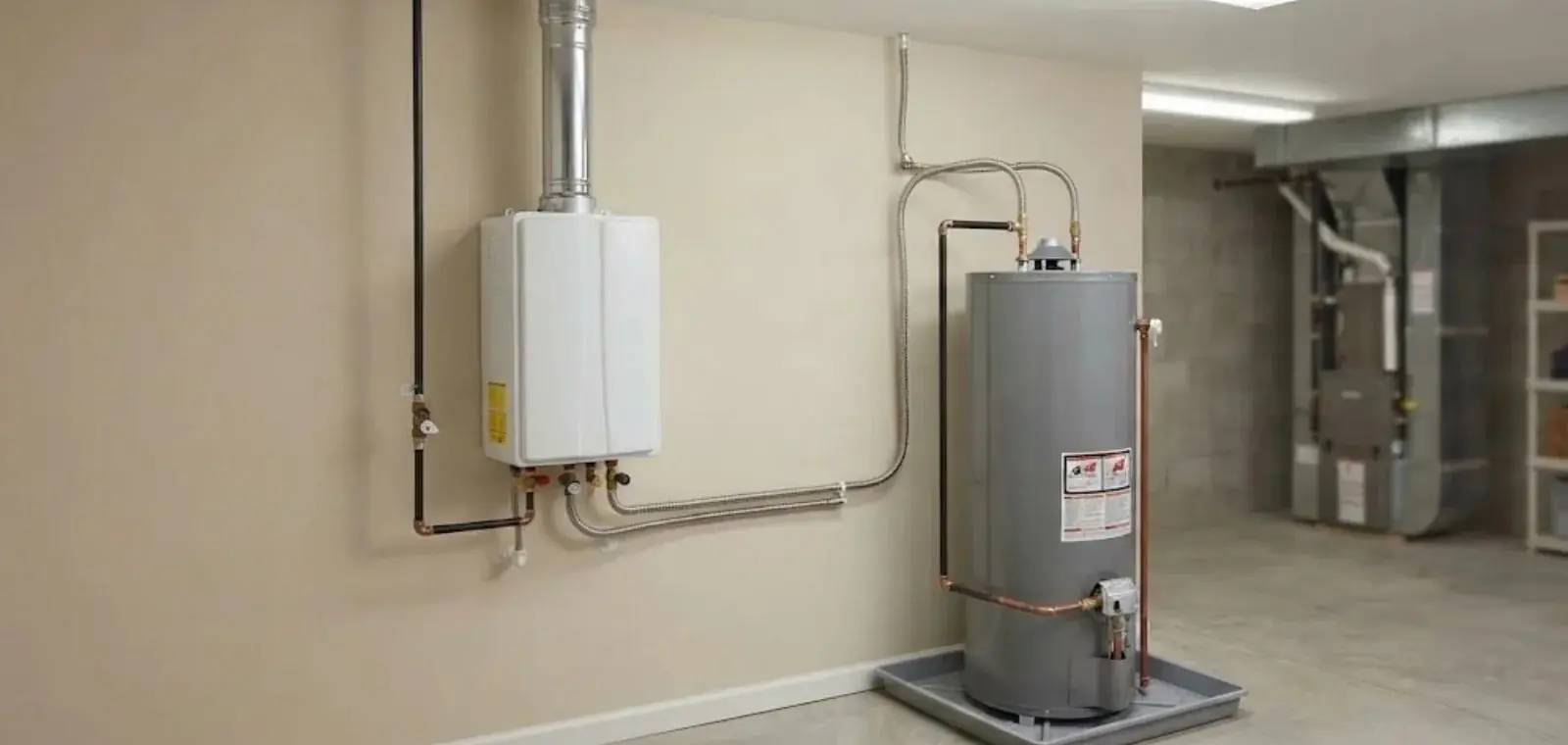
A tankless water heater is sized by two numbers: how much hot water you need at the same moment, and how much the incoming water must be warmed. Get either wrong and you get cold showers in January or a unit that is far bigger than the house needs. This guide explains both numbers and how to work them out.
Flow rate: how much at once
Flow is measured in gallons per minute. Add up the fixtures that could run at the same time, not every fixture in the house. A household that showers while the dishwasher runs needs more flow than one that never overlaps. Count the busiest realistic hour of your week.
| Fixture | Approximate flow in gallons per minute |
|---|---|
| Bathroom sink | 0.5 to 1.5 |
| Shower | 1.5 to 2.5 |
| Kitchen sink | 1.5 to 2.5 |
| Dishwasher | 1.0 to 2.0 |
| Washing machine | 1.5 to 3.0 |
Check the label on your own fixtures. Low flow shower heads cut the total, and older ones raise it. If you plan to upgrade fixtures later, size for the new ones.
Temperature rise: how much to warm the water
Temperature rise is the gap between the cold water entering the house and the temperature you want at the tap. Groundwater is much colder in winter than in summer. A heater sized for summer will disappoint in January. Size it for the coldest incoming water you expect, not the average.
A simple example shows the idea. If a household needs 5 gallons per minute and the winter inlet is cold, the heater must deliver a big rise at that flow. If a unit can only do a smaller rise at 5 gallons, the water will be lukewarm. The manufacturer's chart shows the rise each model delivers at each flow.
Putting the two numbers together
A sizing checklist
- List the fixtures that run together at your busiest time
- Add their flow rates for total gallons per minute
- Choose a winter inlet temperature and a target tap temperature
- Read the rise from the heater's own chart at that flow
- Round up if the numbers are close
The result is a heater whose chart says it can hold your target temperature at your peak flow. If two models qualify, the larger one gives a little margin and usually the same running cost, since a tankless heater only fires when water is flowing.
Gas and electric are not the same decision
Gas tankless units reach a high output but need proper venting and a gas line sized for the burner. Electric units are simpler to vent, but a high output needs a heavy electrical circuit that many panels cannot supply without an upgrade. Check both before you pick a model.
Venting and the gas line are not do-it-yourself work. A poor vent can leak exhaust gas into the house. This is a job for a licensed plumber, and a permit applies. The tankless water heater page covers what a planned install looks like.
Common mistakes
- Sizing for the average water temperature, not the coldest
- Counting every fixture instead of the ones that overlap
- Ignoring the gas line size or the panel capacity
- Forgetting a recirculation line, which makes the first hot water slow
- Skipping the annual flush that keeps scale off the heat exchanger
A minimum flow rate also matters. A tankless heater needs a minimum flow to fire. A faucet turned down to a trickle may not trigger it, and the water stays cold.
Sizing for winter in central Ohio
Winter is the season that tests a tankless heater. The incoming water is at its coldest, and every household turns the shower up. If a unit meets your target on a cold January morning, it will meet it all year. If you only size for fall, expect a shortfall when it freezes.
Ask the installer to show you the rise chart for the exact model and to explain how it applies to your flow. A good answer names your fixtures, your inlet temperature and your target. A vague answer such as it will be fine is a reason to ask again.
Using a quick estimate to check a quote
You can check an installer's number with your own arithmetic. Add up the flow of the fixtures you expect to use together. Look up the model's chart at that flow and your winter inlet temperature, and see whether the rise reaches your target. If the installer cannot show a chart that supports the choice, ask for one.
A sound recommendation comes with numbers that you can read and verify. Be wary of a quote that names a unit before anyone has asked how many bathrooms you have or how many people live in the house. Sizing is a conversation, and the answers should change the result.
A Hilliard note: hard water and flushing
Columbus says it softens its water to an average of 120 parts per million, about 7 grains per gallon. That is moderately hard, and scale builds up inside a tankless heat exchanger, where small passages clog easily. Plan on a periodic descale flush with a pump and a descaling solution, which your plumber can do on a service visit.
A scale-clogged unit loses output and can show an error code. The fix is a flush, not a bigger heater.
When a tank is still the better choice
A tankless heater suits households that want endless hot water and have the space, vent and fuel for it. It is not always the right call. If a home has a very low peak demand, or the gas and electrical upgrades would cost more than the saving, a tank may be simpler. If your tank has failed, the water heater replacement page compares the options.
Dublin homes follow the same sizing logic and share the same water source. If you are weighing options there, the Dublin plumber page shows how to book a visit.
Code references for this work
Tankless venting and gas supply must follow the maker's instructions and the International Plumbing Code (IPC), which Ohio's plumbing code is based on. Electric models are wired under the National Electrical Code (NEC).
Questions we hear from callers
It avoids standby loss from a tank, which helps. The real saving depends on how much hot water you use and the fuel.
You can size for typical use, but the heater should still cover your busiest overlap. A unit that is too small gives lukewarm water.
The manufacturer's manual sets the interval. In moderately hard water, such as Hilliard's, flushing once a year is a common recommendation.
It affects maintenance more than sizing. Moderately hard water means planning for descale flushes, and some homes add a softener.