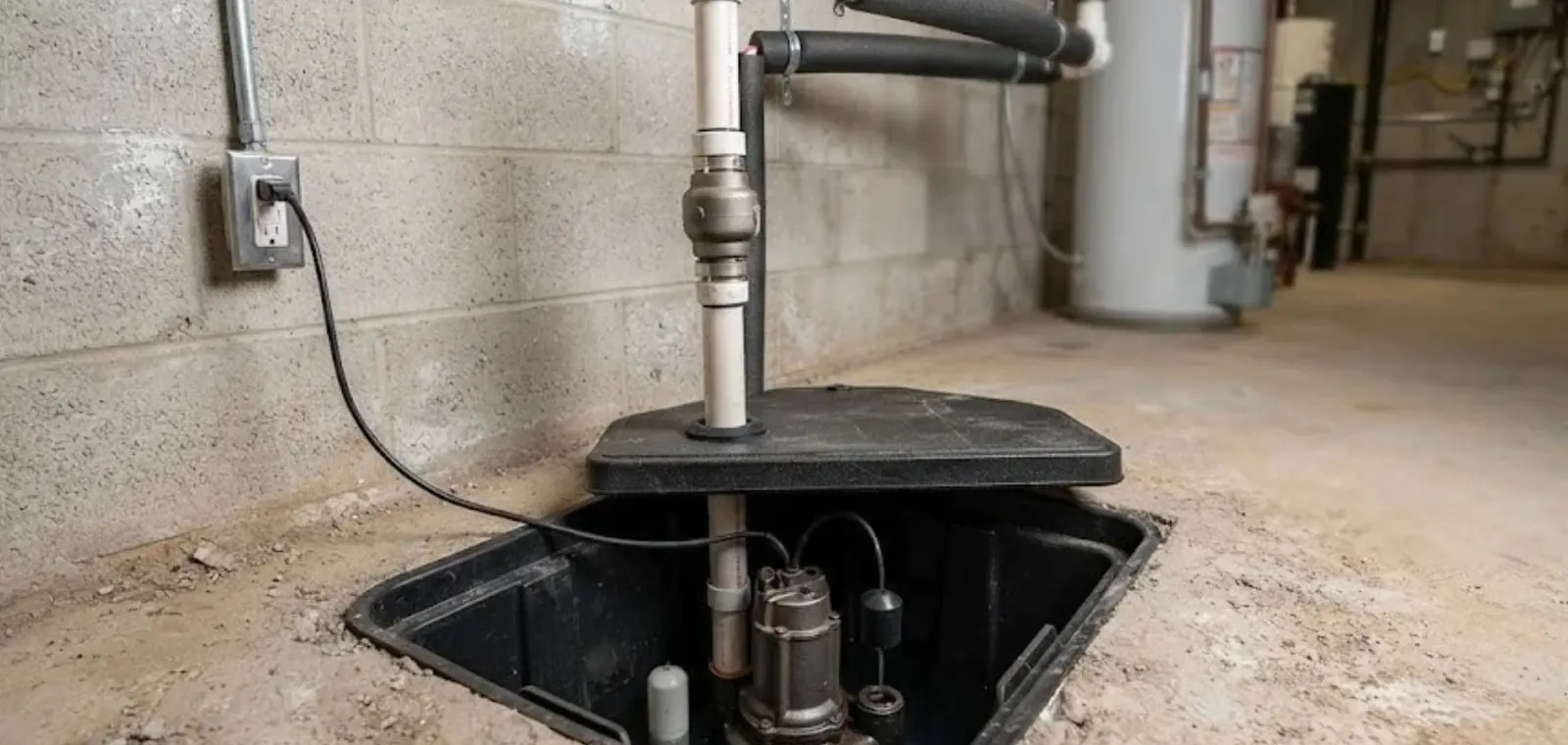
A sump pump keeps a basement dry by collecting groundwater in a pit and pushing it outside. The equipment is simple, and the installation has several details that decide whether it keeps working. This guide covers the pit, the pump, the discharge and the backup, with notes that apply to Hilliard and Franklin County.
The parts of a sump system
| Part | Job |
|---|---|
| Pit or basin | Collects the water below the floor |
| Pump | Pushes the water out of the pit |
| Check valve | Stops discharged water from flowing back in |
| Discharge line | Carries the water outdoors and away from the house |
| Float switch | Turns the pump on and off by water level |
The pit sits below the floor level and may be fed by drain tile around the footing. Water follows the path of least resistance, so a good pit collects it before it rises to the floor. Without a pit, the pump has nowhere to sit.
Submersible or pedestal
- Submersible: sits in the pit, quieter, handles more, costs more
- Pedestal: motor above the pit, easier to service, louder and shorter lived
- Both: need a working float and a clear discharge
A submersible pump is the usual choice today for a finished basement. It is quiet and has a longer life. A pedestal pump suits tight pits and tight budgets. The horsepower should match the volume of water. A pump too small runs constantly, and one too large short cycles. A plumber sizes it for your site.
The discharge line
The discharge carries water out of the house. It needs a check valve near the pump, so water does not drain back into the pit each time. It must slope away from the foundation and end where water will not flow back to the house. In winter, the outlet can freeze, so it should not end in a place that can ice over.
Do not connect the discharge to the sanitary sewer. Clean groundwater sent to the sewer is not allowed in many places and overloads the system. Where the water goes is a question for the local rules. Ask the building authority before you decide.
Power and the backup
What a good installation includes
- A dedicated outlet with ground fault protection
- A check valve and a clean union for service
- A pit cover to keep out debris and reduce humidity
- A high water alarm
- A battery backup or a second pump
Storms cause power loss, and that is when the pump is most needed. A battery backup pump runs for a limited time on a charged battery and gives you hours, not days. If your basement has flooded before, a backup is worth the extra money. A water-powered backup is another type, and it depends on your water supply.
Sizing the pump to the site
Pump size is measured by how much water it moves per hour at a given height, called the head. The height is the vertical distance from the pump to the point where the water leaves the house, plus losses in the pipe. A pump that is rated well below your height will trickle. One far above it will cycle on and off and wear out sooner. A plumber measures the height and the length of the run, and picks a pump that fits.
Observe the pit during a storm if you can. Note how fast it fills and how often the pump runs. A pit that fills in minutes during a heavy rain needs a stronger pump or a second one. A pit that is almost always dry may only need a modest unit. That information is useful to the installer, so write it down and share it when you call.
Think about noise and space as well. A pump in an unfinished utility corner is easy to reach. A pump under a finished stair or in a closet needs access for service. Plan the access before the pit is cut, since it is much harder to add later.
Finally, keep a spare. A basic pump on a shelf, along with a check valve and a short length of pipe, lets you swap in a replacement within minutes if the main pump dies in the middle of a storm. A homeowner who can do that avoids a flooded floor. If you are not comfortable making the swap yourself, ask the plumber to show you how during the install.
A Hilliard note: where the water goes
The City of Hilliard runs a Sanitary Backflow Program for homes in older sewer areas, and the Franklin County Public Health office provides plumbing inspection for most of the county. Before you pipe a sump discharge anywhere near the sewer, ask the city. Discharge to the yard, away from the foundation and neighbors, is the usual path.
The city's Building Standards Division states that plumbing work needs a permit. Confirm what applies to your project before it starts.
Maintenance that keeps it working
Test the pump every few months by pouring a bucket of water into the pit. The float should lift, the pump should start and the pit should empty. Clean the pit if debris builds up. Check that the discharge outlet is clear, especially after winter. A pump that sits idle for a season can seize.
A pump generally lasts a number of years and then fails. The signs are noise, constant cycling, a stuck float or a pump that runs but does not move water. If your pump is old and storm season is coming, replace it before it fails. The sump pump page covers repair and replacement.
Installation day
A plumber breaks the floor if the pit is new, sets the basin, runs the discharge through the rim joist or wall and seals the penetration. The work includes testing the pump and the float and checking the discharge outdoors. A new pit takes longer than a pump swap, because the concrete must be cut and patched.
The same work applies to Dublin, which has many basements too. See the Dublin plumber page for how to book. For a related problem such as groundwater through a wall, the basement waterproofing page explains the plumbing side.
Questions we hear from callers
The city says plumbing work needs a permit. Ask the Building Standards Division what applies to your project.
Generally not. Many places do not allow groundwater in the sanitary sewer. Ask the city before you decide.
Every few months, and before storm season. Pour water into the pit and watch the pump start and empty it.
If your basement has flooded or a power outage would be costly, yes. It buys time during a storm.