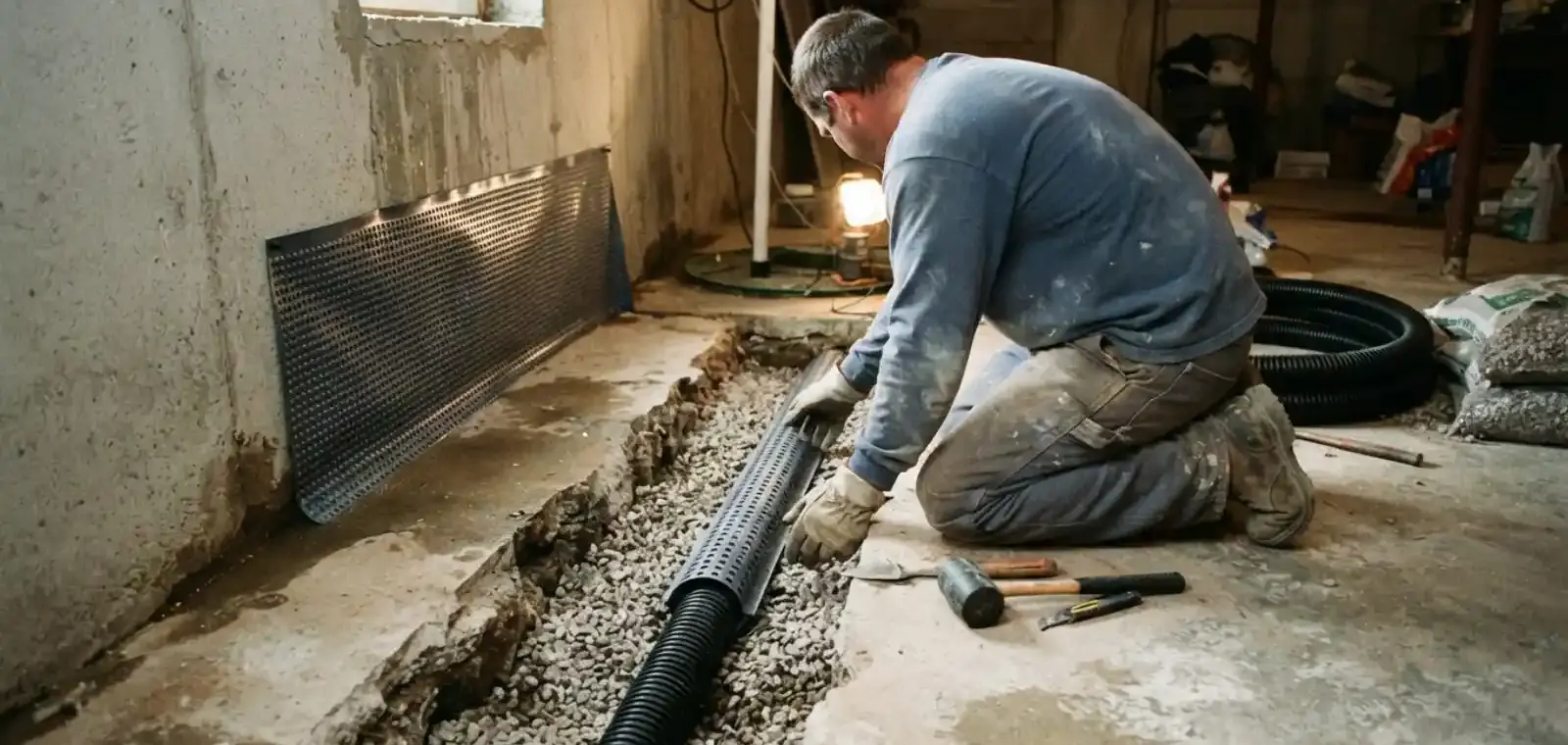
Basement water is a planning problem as much as a repair. The same damp patch can come from a failed sump pump, a clogged downspout, a crack in a wall or a sewer backup, and each has a different fix. Call the line to schedule an assessment, and a dispatcher will book the earliest appointment that fits. For active flooding, call the 24/7 line and read the sump pump repair page while you wait.
Where basement water comes from
| Source | Clue | Typical response |
|---|---|---|
| Roof and grading | Water after rain along one wall | Extend downspouts, correct slope |
| High groundwater | Seepage at the wall and floor joint | Interior drain tile and a sump |
| Failed sump pump | Pit full, pump quiet | Repair or replace the pump |
| Sewer backup | Water from a floor drain, smell | Clear the main line, consider a backflow preventer |
| Plumbing leak | Damp spot unrelated to rain | Leak detection |
What the City of Hilliard says
Hilliard runs a Sanitary Backflow Program for homeowners with repeated sewer backups during heavy rain. The city says the program does not apply to wet basements caused by water entering through foundations or other sources, and that this water typically comes from faulty sump pumps or problems with existing downspouts and drainage. That is a useful starting list for an assessment.
If you think water came in through a floor drain, the city asks you to call its Operations Department at (614) 334-2367 so the main line can be inspected. That visit costs you nothing to request, and it tells you whether the water is sewage.
What the plumbing side includes
- Sump pit, pump, check valve and discharge line
- Battery backup for outages
- Interior perimeter drain connecting to the sump
- Backflow preventer on the floor drain or sanitary lateral
- Downspout and discharge routing that leads water away from the house
Interior drain, exterior work and where we stop
Interior drain systems collect water at the footing and move it to a sump. Exterior waterproofing means excavating, sealing and installing drain tile around the foundation. Cracks in the wall or structural movement are a foundation and masonry problem. We handle the plumbing and drainage side, and we will tell you when a foundation specialist is the right call.
Old basements in older neighborhoods
In Old Hilliard and the 1950s subdivisions, basements may have older drain tile, floor drains tied directly to the sewer and sump pits that were added later. Ask us to check where each drain goes. A floor drain tied to the sanitary sewer is the one that can bring sewage back.
What affects the price
- Length of interior drain and the floor to be opened and patched
- Pump capacity, backup power and discharge distance
- Whether exterior grading or downspouts are part of the job
- Permit and inspection
The city states that plumbing work needs a permit and that contractors must be registered with the Building Department. You get a clear price before work starts.
Call to schedule an assessment. For active flooding, the line is answered 24/7.
If the issue is a floor drain backup, see sewer line cleaning. For a basement bathroom, plumbing installation covers the ejector pump.
Code references for this work
Sump discharge, floor drains and backwater protection are covered by Ohio's plumbing code, which is based on the International Plumbing Code (IPC). Anything that touches a pump's wiring follows the National Electrical Code (NEC).
Basement water questions
Part of it is. Sump pumps, drain tile connections and backflow preventers are plumbing. Foundation cracks and exterior membranes belong to specialized contractors.
Water from a floor drain with a sewage smell is a sewer issue, and the city asks you to report it to its Operations Department. Water through walls after rain is usually groundwater or surface drainage.
If your basement is finished or stores valuables, yes. Storms often cut power.
No. Its Sanitary Backflow Program applies to sewer backups from heavy rain, and the city says it does not cover wet basements from foundations or other sources.
Yes. Downspouts that discharge at the foundation overload the soil around the wall. Extending them away from the house is one of the cheapest improvements.
Yes. The line is answered 24/7. We cannot promise an arrival time, but we will tell you how to protect the area while you wait.