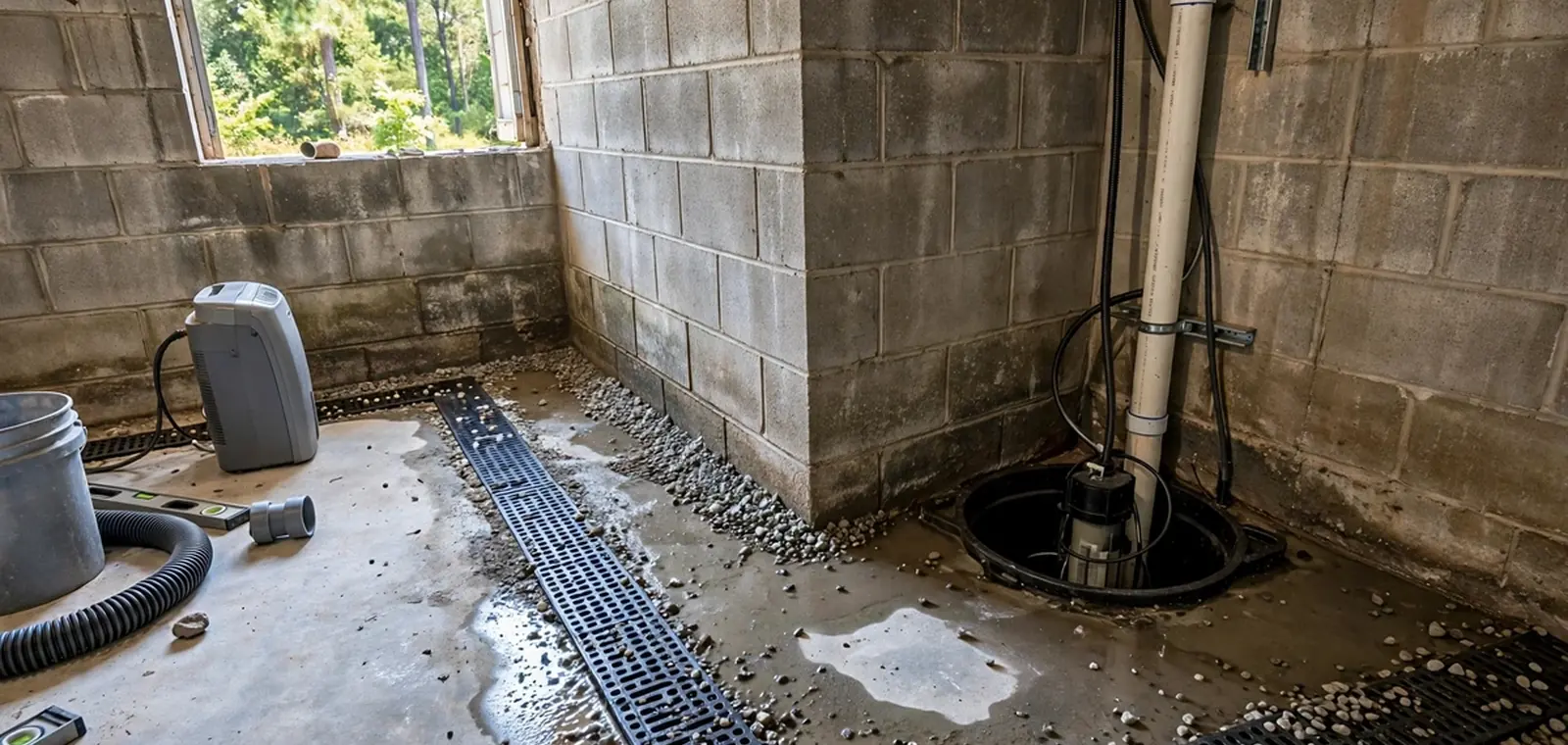
Water in a basement has several possible sources, and the fix depends on which one it is. Some are plumbing: a leaking pipe, a failed sump pump, a backed-up floor drain. Others are about the ground and the foundation, and a plumber cannot fix those. Knowing the difference saves time and money, and this guide helps you sort it out before you call anyone.
Start with where the water appears
| What you see | Likely source | Who fixes it |
|---|---|---|
| Puddle under a water heater or softener | Appliance or connection leak | Plumber |
| Water from a floor drain, smelly | Sewer or main line backup | Plumber, urgently |
| Water at the base of a wall after rain | Groundwater or surface drainage | Waterproofing or grading contractor |
| Damp spot on a wall near a pipe | Supply or drain pipe leak | Plumber |
| Wet sump pit that never empties | Failed pump or stuck float | Plumber |
Rain is the biggest clue. If the water appears only after a storm, the cause is outside. If it appears on a dry day with nothing running, the cause is likely a pipe or an appliance. A leak that is constant points to plumbing.
The plumbing side of a wet basement
- A sump pump that has stopped, cycles nonstop or cannot keep up
- A floor drain that backs up from the main line
- A leaking supply line, water heater or washing machine hose
- A cracked drain pipe under the slab
The sump pump is the most important piece of equipment for many basements. If the pit is full and the pump is not running, the floor is minutes away from flooding. Check that it is plugged in and the float moves freely. If the pump runs but the water does not leave, the discharge line may be blocked or frozen. The sump pump page walks through what a plumber checks.
What a plumber does not do
A plumber does not repair foundation cracks, waterproof walls or regrade the yard. Those are the work of a waterproofing or masonry contractor. A good plumber will tell you which side your problem falls on and will not sell you work that does not fix it. The basement waterproofing page explains where plumbing ends and the other trades begin.
The two jobs often overlap. Interior drain tile, for example, leads to a sump pit, and a plumber sets the pump and the discharge. A waterproofing contractor handles the tile and the wall treatment. Hiring both for a single project is common.
Simple checks you can do
Before you call anyone
- Look at the gutters and downspouts, which should carry water several feet away
- Check that the soil around the foundation slopes away from the house
- Test the sump pump by pouring a bucket of water into the pit
- Watch the water meter with all taps off
- Take photos and note when the water appears
Downspouts that drop water beside the foundation are the most common cause and the cheapest to fix. Extensions that carry water away from the house solve many wet basements by themselves. This is not plumbing, but it is a sensible first step.
When it is an emergency
Water coming up through a floor drain with a sewer smell is a sewage backup, and it is a health risk. Stop using water, keep people out and call for help. If water is rising near the electrical panel or an outlet, stay out and call the utility or an electrician. Do not wade into standing water near live power.
Questions to ask a contractor
A good contractor starts by finding the source of the water. Ask them to show you where it comes in, and ask what they will do about the outside as well as the inside. Be wary of a quote that is written before anyone has looked at the gutters, the grading and the sump. Ask what is guaranteed and for how long, and ask who handles the pump and the electrical work.
Get at least two opinions, from different trades if you can. A plumber, a waterproofing contractor and a masonry contractor see different parts of the problem. If two of them agree on the cause, you can trust the plan more. If they disagree, ask each to explain why, and start with the cheapest fix, which is usually outside.
Keep records of every wet event. Note the date, the weather, where water appeared and how far it spread. A simple log turns a vague worry into evidence a contractor can use. It also helps if you file an insurance claim or sell the house, since a buyer will ask about past water and a clear history with repairs documented is easier to defend than silence.
A Hilliard note: the city's backflow program
The City of Hilliard runs a Sanitary Backflow Program and asks homeowners who suspect a sewer backup through a floor drain to call its Operations Department at (614) 334-2367. That is a different problem from groundwater coming through a wall. A sewer backup is a plumbing emergency and the city wants to know.
If the water is clear and appears after rain, it is drainage. If it is dark and smells, it is the sewer.
After the water is gone
Dry the space quickly. Run fans and a dehumidifier, and move wet items out. Mold can start within a couple of days in damp conditions, so speed matters. Take photos for your insurer, and ask your policy what it covers, since water from groundwater and from a backed-up drain are often treated differently.
Dublin homes have basements too, and the same sorting applies. The Dublin plumber page explains how to book a visit.
Fix the cause, not the symptom
A pump that runs often is a sign of a wet site, not just a wet basement. If your pump is the only thing standing between you and flooding, add a backup. A battery backup or a second pump is cheap insurance compared to a flooded floor. Ask a plumber about options when the pump is serviced.
Code references for this work
Sump and floor drain work is covered by Ohio's plumbing code, which is based on the International Plumbing Code (IPC). Pump wiring follows the National Electrical Code (NEC).
Questions we hear from callers
Only the parts that involve a sump pump, drains or pipes. Foundation walls and grading belong to a waterproofing contractor.
That points to groundwater or surface runoff, not a pipe. Check gutters, downspouts and grading.
That is a sewer backup. Stop using water and call a plumber. In Hilliard, the city asks that you call its Operations Department at (614) 334-2367.
It is a good idea if your pump runs often, since a single pump failure in a storm can flood the floor.