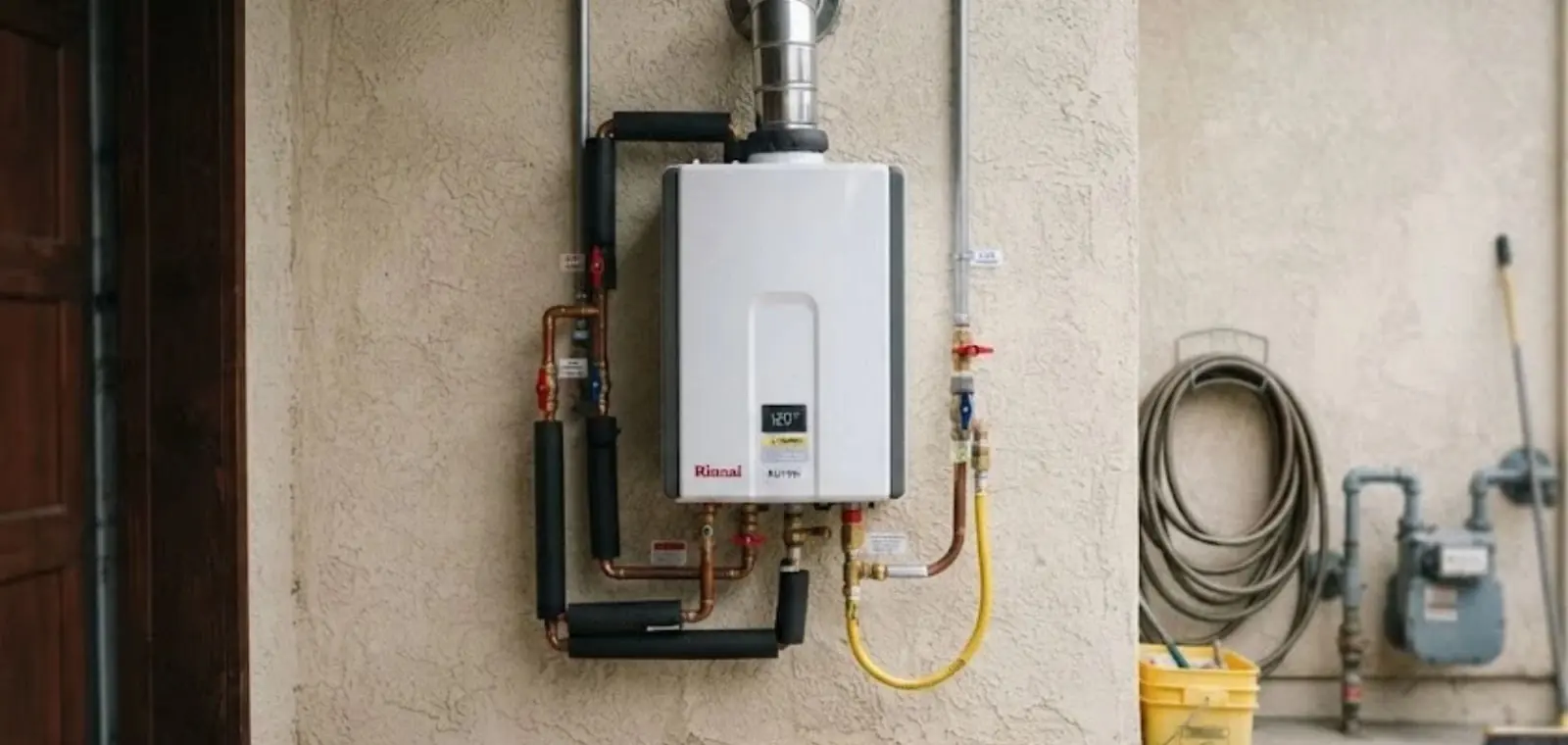
A 200,000 BTU tankless water heater sits at the top of what a single residential unit offers. It can serve a large home with several bathrooms, a small business or a household that runs a lot of hot water at once. It also demands more from the gas line, the vent and the installer than a smaller unit does.
What 200,000 BTU means
BTU stands for British thermal unit, a measure of heat. A tankless heater burns gas to heat water as it flows, and the input rating tells you how much heat it can make per hour. A higher number means more hot water at a given temperature rise. Efficiency, which is lower than 100 percent, reduces the output.
Output depends on the rise. If the incoming water is cold and you want it hot, a unit delivers fewer gallons per minute than it does when the incoming water is warmer. The manufacturer's chart shows both, and the chart matters more than the BTU number alone.
Who needs a unit this large
- A large house with three or more bathrooms in use at the same time
- A home with a soaking tub that fills quickly, plus other fixtures
- A small business such as a salon, a restaurant kitchen or a gym
- A multi-family building with a shared heater
Most houses do not need this much. A household of four with two bathrooms is usually well served by a smaller unit. Oversizing a heater does not make it work better. It costs more and needs more gas. Run the numbers from your own fixtures first, as the sizing method in the tankless water heater page explains.
What the gas line must handle
A unit this size draws a lot of gas when it fires. The gas meter, the main line and the branch to the heater all need enough capacity, on top of the furnace, the stove and any other appliance. A line that is too small starves the heater, and it will shut down or give erratic output.
A plumber calculates the total load and the length of the run. This is not a job to guess at. Any change to a gas line needs a permit and a test, and it must be done by a licensed professional. If you smell gas at any point, leave the building and call the gas utility from outside.
Venting and combustion air
| Item | Why it matters |
|---|---|
| Vent pipe material and length | Exhaust must leave the house safely |
| Combustion air supply | The burner needs air to burn cleanly |
| Condensate drain | High efficiency units make acidic condensate |
| Clearances | Distances to windows, doors and meters |
Condensing units are more efficient, and they produce condensate that needs to drain to a floor drain or a neutralizer. The condensate is mildly acidic. A poor drain can corrode the unit or the plumbing. Ask your installer how it will be handled.
Cascading smaller units
Some installations use two smaller units that work together instead of a single large one. This gives redundancy, since one unit can keep working if the other is serviced. It also gives a lower starting output for small demands. The tradeoff is cost and space. A commercial job often benefits, and a house rarely does.
Questions for the installer
- What is the output at my winter inlet temperature at the flow I need
- Is my gas line big enough for this load, with everything else running
- Where will the vent terminate and does it meet the clearances
- How will condensate be drained
- What does the annual descale involve
Commissioning and what to expect on the first day
A large unit needs a proper commissioning visit. The installer checks the gas pressure with the unit firing at full rate, sets the temperature, tests the vent for leaks and confirms the condensate drains freely. Ask to see the combustion check, and ask for the settings to be written down. A heater that is only tested at a low flow can hide a problem that appears the first time two showers run together.
Plan for the water to be off for several hours. Expect the old tank to be drained and removed, the gas shutoff and a sediment trap to be fitted and the new unit to be mounted on the wall. If the unit is replacing a tank, ask where the old tank will go. Walk through the settings with the installer, and keep the manual where you can find it. Registration of the unit with the maker also keeps the warranty in order.
Service access is worth thinking about too. A wall mounted unit needs clear space in front for a technician to work, and the isolation valves for flushing should be easy to reach. Ask the installer to fit service valves on the hot and cold lines at the unit, so that an annual descale takes minutes and not an hour. A unit with no service valves gets skipped at maintenance time, and that shortens its life.
A Hilliard note: scale and winter water
Columbus says it softens water to an average of 120 parts per million, about 7 grains per gallon, which is moderately hard. A high output heater has narrow passages in its heat exchanger, and scale builds in them. Annual descaling matters more on a big unit, since the heater works harder at a lower margin.
Franklin County winters bring cold incoming water, and that is when a large unit proves its size.
Cost and payback
This page does not give prices, because they depend on the unit, the gas work and the venting. Ask for a written quote with the line items. A 200,000 BTU unit is a significant investment, and the payback depends on how much hot water you use. A home that does not use much will not recover the cost quickly.
If your current tank has failed, compare the two paths on the water heater replacement page before you commit. The same advice applies in Dublin, as the Dublin plumber page shows.
Code references for this work
Gas piping, venting and condensate drains for a unit this size are regulated, and Ohio's plumbing code is based on the International Plumbing Code (IPC). Follow the maker's installation manual too.
Questions we hear from callers
For most homes it is more than needed. It suits large homes with several bathrooms in use at once, and small businesses.
Often yes. A plumber calculates the total load and the run length. Do not guess.
High efficiency units make acidic water when they cool exhaust gas. It must drain safely.
Follow the manufacturer's schedule. In moderately hard water, such as Hilliard's, once a year is a common recommendation.