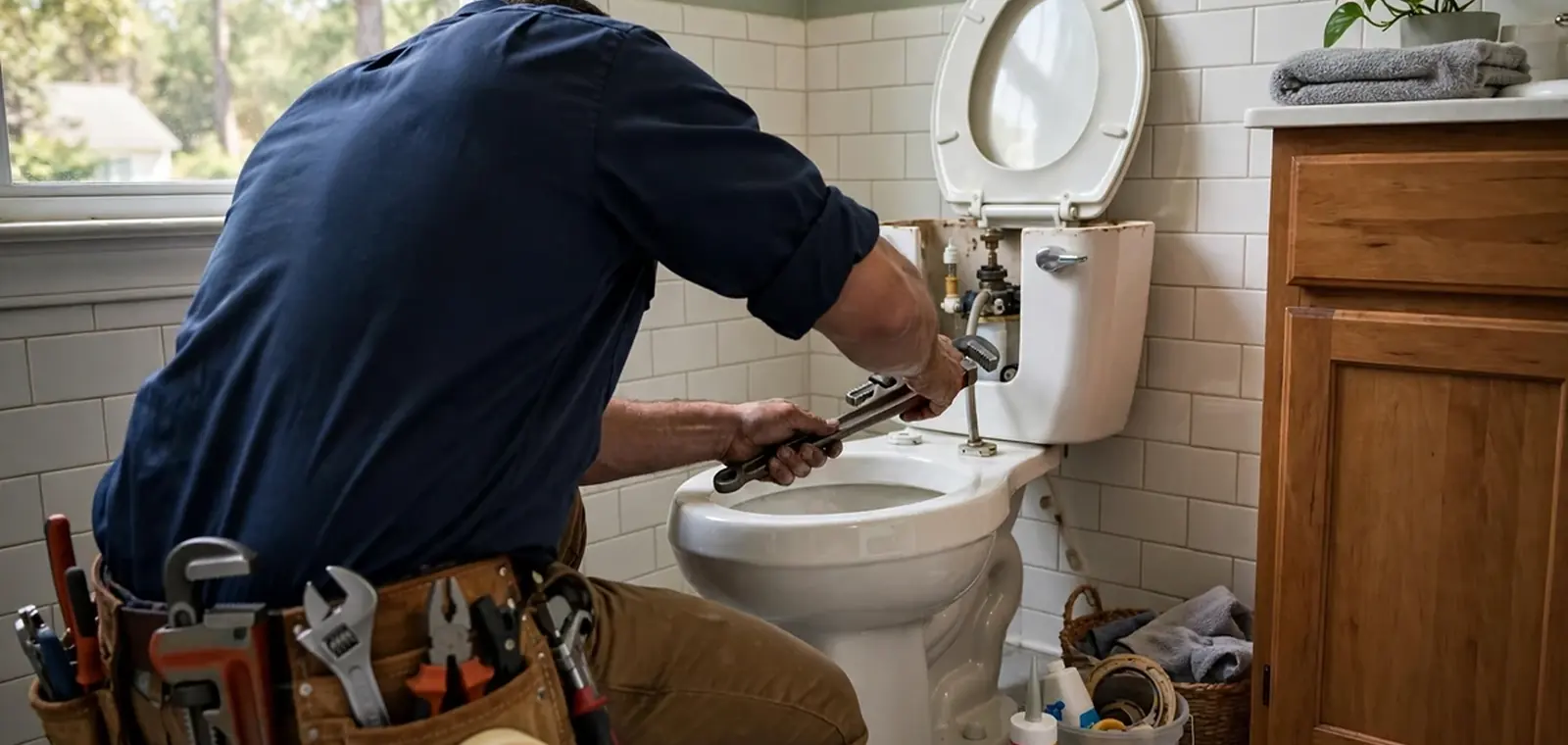
If a toilet is overflowing, lift the tank lid, push the flapper down to stop the refill and close the shutoff valve on the wall behind the toilet, turning it clockwise. Put towels around the base and take bathroom rugs away. If the toilet is not the only backing-up fixture, stop using all water and call our 24/7 line, since the problem may be deeper in the drain.
Overflow, leak, rocking: when a toilet cannot wait
A toilet is the one fixture a household cannot go without, and a failing one can damage a bathroom floor in hours. These are the situations that justify an urgent visit.
- Water spreading around the base after a flush
- A toilet that overflows repeatedly, even after plunging
- Sewage smell or water seeping from the floor
- A cracked bowl or tank
- A toilet that rocks, which means the seal may be failing
Running and phantom flushing
A toilet that runs on its own wastes water and drives up the bill. The usual causes are a worn flapper that no longer seals, a fill valve that does not shut off and a chain that is too tight or too loose. These are inexpensive parts and the repair is quick. If the fill valve is failing, we will tell you whether to replace the whole assembly or just the part.
Leaking at the base
Water at the base can come from the wax ring seal, the closet bolts, a cracked tank or the supply line. If the toilet rocks, the seal is likely failing. A new wax ring or a sealing gasket and checking that the flange is sound usually resolves it. A damaged flange is a different repair, since a cracked or rusted flange needs to be restored so the toilet can sit flat.
| Symptom | Likely cause | Repair |
|---|---|---|
| Runs after flushing | Worn flapper or fill valve | Replace the parts, adjust the chain |
| Water at the base | Failed wax ring or loose bolts | Reset the toilet with a new seal |
| Weak flush | Clogged jets or low tank water | Clean the rim jets, adjust the fill |
| Repeated clogs | Partial blockage downstream or an old low-flow design | Cable the line or replace the toilet |
| Cracked bowl or tank | Impact or frost damage | Replace the toilet |
Unclogging without a plunger
If you have no plunger and the bowl is rising, close the shutoff valve and stop flushing. A flange plunger or a toilet auger solves most clogs. Hot tap water and dish soap can loosen a soft blockage over a few minutes. If it keeps returning, the problem may be in the branch line, and drain cleaning is the next step.
Toilet installation and replacement
Replacing a toilet is a fit for the same crews. We remove the old unit, check the flange, install a new wax ring or seal, set the new toilet level and test it. If the floor is soft around the base, we will show you before the new toilet goes in.
Older homes and toilet flanges
In houses built before the 1980s, cast iron and lead closet flanges can corrode. A flange that looks fine from above may be loose or cracked underneath, and a plumber can check it as part of a reset.
What the price depends on
- The part or fixture involved and whether the toilet is repairable
- Whether the flange or floor needs work
- A new toilet versus a repair
- After-hours dispatch for an overflow
You get a clear price before work starts. If a floor has been wet for more than a day, we will mention drying and mold concerns.
Close the shutoff valve and call. The line is answered 24/7.
If the toilet issue is part of a bigger plumbing problem, read about faucet repair and plumbing installation. For a leak that may not come from the toilet, see leak detection.
Code references for this work
Toilets are set to clearance and flange rules in the International Plumbing Code (IPC), the model code behind Ohio's plumbing code.
Questions we hear from callers
Yes. The line is answered 24/7. An overflowing or leaking toilet is booked as urgent, and we cannot promise a specific arrival time. We will tell you how to stop the water while you wait.
A worn flapper, a misadjusted chain or a failing fill valve is the most common reason. Replacing the parts usually fixes it.
The wax ring, closet bolts, a cracked tank or a loose supply line can cause it. Wipe it dry, then see where it returns.
Many homeowners do. The risk is a poor seal or a damaged flange that leaks under the floor, which you may not see for months. A plumber can check the flange and test it.
Yes. Rocking breaks the seal and lets water seep under the base. It needs resetting or the floor and flange need repair.
Lift the tank lid, push down the flapper and close the supply valve behind the toilet. Then stop using all water and call if the cause is not obvious.