Sewage backing up into a tub, a floor drain or a basement toilet is an emergency. Our line is answered 24/7. Stop using every drain and toilet in the house, keep children and pets out of the wet area, and avoid touching the water, which can carry bacteria. If the backup is deep, ask the dispatcher whether you should also call your insurer and a cleanup contractor.
Sewage backup emergency: signs it is the sewer line, not a clog
A clog in one fixture is a local problem. A sewer line problem shows up in several places at once, and it returns even after cabling.
- Gurgling or bubbling in more than one fixture
- Sewage smell in the yard or basement
- Backups that return days after a cleaning
- Wet or sunken spots in the lawn over the line
- Slow drains throughout the house at the same time
Why a camera comes first
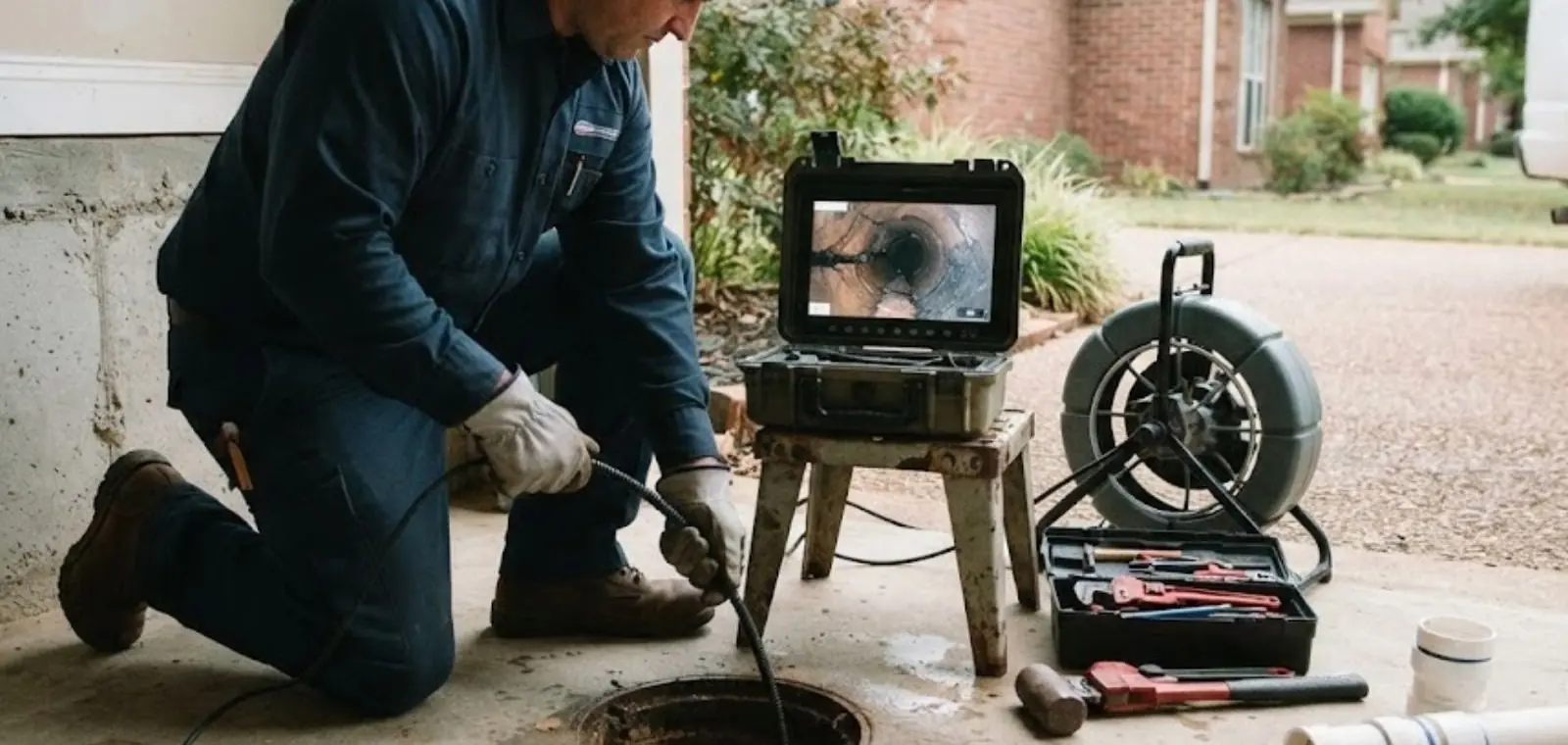
A sewer line cannot be diagnosed by guessing. A camera on a push cable travels through the cleanout and shows what is wrong: roots entering a joint, a cracked or collapsed section, a belly where water pools, grease buildup or an offset joint. It also measures the distance from the cleanout, so the repair is planned for that point rather than along the whole yard.
The footage is yours to keep. If you are buying or selling a home, a sewer camera inspection is the way to know what you are getting, and it costs far less than a surprise repair after closing.
Repair options and how they compare
| Method | Best for | Trade-off |
|---|---|---|
| Spot repair by excavation | One damaged section, easy access | Digs up the yard or driveway near the break |
| Pipe lining | Cracked or root-damaged pipe that is still aligned | Does not fix an offset joint or a collapse |
| Pipe bursting or replacement | Long damaged runs, collapsed pipe | Higher cost, more involved |
| Cleaning and monitoring | Minor buildup with no structural damage | Needs a maintenance schedule |
Lining and bursting limit how much of the yard has to be opened up. Not every line qualifies, which is why the camera finding decides the plan. After the repair we run the camera again to confirm the line flows clean.
Older homes and cast iron in Hilliard
Hilliard connected to the Columbus regional sewer system in the 1960s, and the 1960s through 1980s homes built around it often have cast iron or clay laterals that are now more than 40 years old. Cast iron scales from the inside and eventually cracks. Clay joints let roots in. Both are the kind of problem a camera sees quickly.
Who owns which stretch of pipe matters before any digging. Responsibility depends on where the break is, so ask the Hilliard Building Standards Division or the sewer utility before you assume the repair is yours, and ask what permit applies.
Permits and registered contractors
The city's Building Standards Division states that plumbing work needs a permit, and every contractor working in Hilliard must be registered with the Building Department. Ask for the registration before you sign, and use Hilliard 311 to verify it.
What affects the price of sewer repair
- The depth and length of the damaged section
- Whether the repair is under a driveway, a patio or open lawn
- The method chosen: spot repair, lining or replacement
- Restoration work after digging, like sod or concrete
- After-hours dispatch for an urgent backup
You get a clear price before work starts, and the camera finding is attached to the quote.
Stop using water and call. A dispatcher is on the line 24/7.
If a clog is the immediate problem, drain cleaning clears it first. For recurring blockage, sewer line cleaning and hydro jetting address the buildup, and the same crews serve Dublin.
Questions we hear from callers
Yes. The line is answered 24/7. A sewage backup is treated as urgent. We do not promise an arrival time, but we will tell you what to avoid and what to document while you wait.
Yes. Roots seek moisture and enter through joints or cracks. They thicken, catch debris and eventually block the line. A camera shows the entry point.
A resin-saturated liner is pulled through the damaged pipe and cured against the wall. It seals cracks and root entry points, and it avoids excavation where the pipe is still aligned.
The city states that plumbing work needs a permit. Sewer work may involve additional rules depending on where the break is, so ask the Building Standards Division before work starts.
If clogs return after cabling, several fixtures slow at once or you are buying a home, a camera inspection shows the real condition of the line.
Standard homeowners policies often exclude sewer line wear and root damage, though some offer an add-on. Check your policy and ask your insurer about sewer backup coverage.