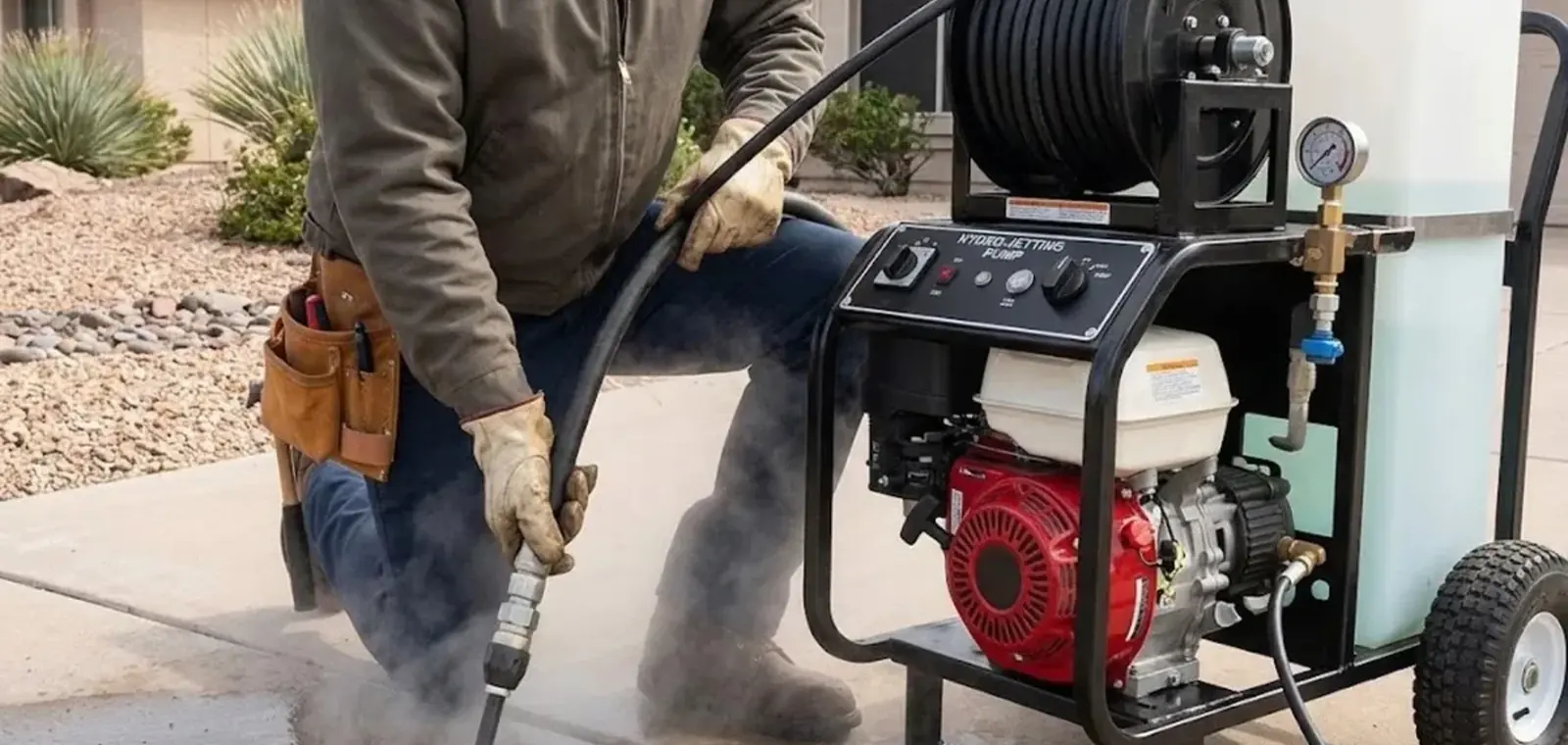
A drain that backs up the same week it was cleared is an urgent problem, and jetting is often the answer. Our line is answered 24/7. While you wait, stop using the affected drains, keep water off in the rest of the house and do not add chemical cleaners. If you have already had the drain cabled and it clogged again, tell the dispatcher so the crew brings the right equipment.
Backups that keep coming back: when jetting is the next step
A cable punches a hole through a clog. Jetting uses water at high pressure, delivered through a nozzle that sprays forward and backward, to scour the whole inside of the pipe. The debris is washed downstream or pulled back out. It reaches the grease, scale and soft roots that a cable leaves behind.
- Grease buildup in kitchen and restaurant lines
- Heavy scale in older cast iron lines
- Soft root growth after a cable has opened the line
- Repeated clogs in the same line within a few months
- Sludge in long horizontal runs
How a jetting visit works
The plumber starts with a camera, because jetting is for sound pipe. If the camera shows a cracked, offset or collapsed section, jetting can make it worse, and the better step is repair. If the pipe is sound, the nozzle goes in through the cleanout. The pressure and flow are set for the pipe size and material.
After jetting, a second camera pass confirms the pipe wall is clean. You see the before and after footage and decide what comes next.
| Condition | Jetting is | Better choice |
|---|---|---|
| Greasy, scaled but intact pipe | A good fit | Jet, then monitor |
| Roots in a sound joint | A good fit after cutting | Cable then jet, then repair the joint |
| Cracked or collapsed pipe | Not recommended | Sewer line repair |
| Single fixture clog | More than needed | Drain cleaning |
Why Hilliard homes use jetting
The city says its housing boom ran through the 1950s to the 1980s. Houses from that period often have cast iron drain lines. Cast iron roughens as it ages, and rough walls hold onto grease and paper. Jetting removes that layer, which is why a line that clogged every few months can run clean for a year or more afterward.
Commercial kitchens along busy corridors such as Cemetery Road face the same pattern in a harsher form. Grease from fryers and dishwashers coats the line, and jetting is part of the normal maintenance for a restaurant. See commercial plumbing for scheduled service.
Jetting and older pipes
A line that is thin or already cracked can be damaged by pressure. That is why we inspect first and explain what we see. If the camera shows damage, we say so and do not jet.
What drives the price of a jetting visit
- Pipe length and diameter
- How much buildup is in the line
- Whether a camera inspection is included before and after
- Access through a clean cleanout or a pulled toilet
- After-hours dispatch for an urgent backup
A clear price comes before the work. If you are comparing, ask whether the quote includes the camera pass, since it is how you confirm the work.
Call the 24/7 line. We will arrange a visit with the right equipment.
For everyday blockages, drain cleaning is the first step. For the full main line, see sewer line cleaning.
Code references for this work
Jetting is done through accessible cleanouts, which the International Plumbing Code (IPC) requires on building drains. Ohio's plumbing code is based on that model code.
Questions we hear from callers
Yes. The line is answered 24/7. Urgent backups are booked first, and we do not promise a specific arrival time. We will ask whether the line has been cabled recently so the crew can plan.
On sound pipe, yes. On cracked or fragile pipe, it can cause damage, which is why a camera pass comes first and we will not jet a line we think is at risk.
Snaking clears a path through a clog. Jetting scours the whole pipe wall with moving water. The first fixes a blockage, the second removes the material that causes it.
It depends on use. A residential line may stay clear for a year or more. A restaurant line needs a schedule, often every few months.
It removes soft roots and the ones cut by a cable. Large roots that have taken hold in a joint need to be cut first, then the joint repaired.
It helps. A cleanout gives access to the line. Without one, the plumber may pull a toilet or use a roof vent, which adds time.