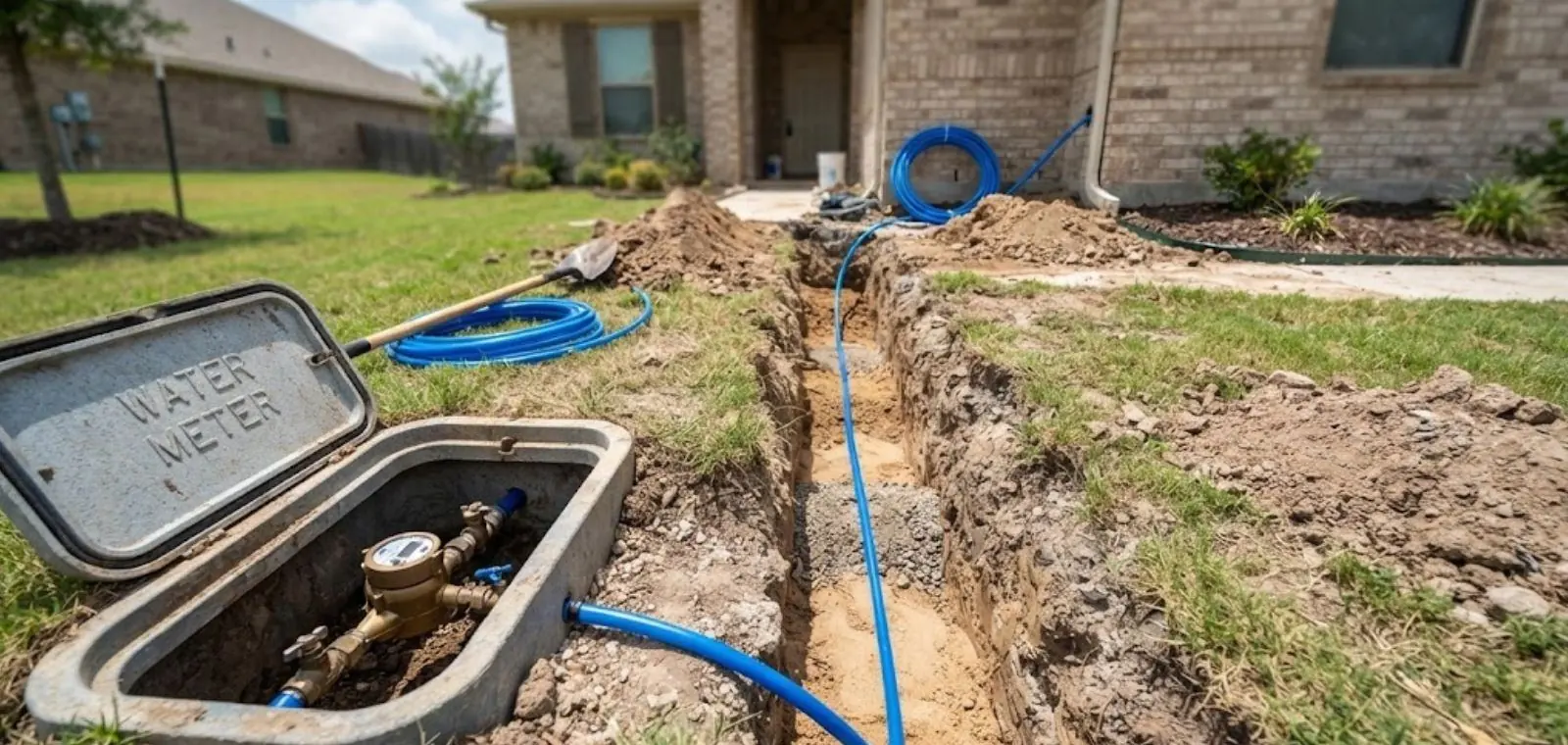
A broken water service line is an emergency because it can run unseen under a yard or driveway until the ground gives way. If you hear water running with every tap closed, see a wet patch over the line or lose pressure at every faucet, call our 24/7 line. While you wait, close the shutoff valve inside the house where the line enters, and leave the meter and any valve outside to the utility.
Signs the water line is the problem
- Meter moving with every fixture off
- Soft or soggy ground between the meter and the house
- Sudden pressure loss at every tap
- Brown or cloudy water after a break
- A water bill far higher than normal with no change in use
Water lines hide. A leak may run for months before it surfaces, and by then it has cost money and softened the soil around the pipe. A fast diagnosis keeps the repair small.
The meter, the line and who handles what
The water line begins at the utility's connection at the main, passes through the meter and runs to your shutoff valve inside the house. Columbus supplies water to Hilliard properties, and the meter and the connection at the main belong to the utility. Ask before you touch anything on the street side of the meter, and use our dispatcher to sort out which part of the line is yours.
Columbus is replacing meters at some Hilliard properties under its Enhanced Meter Project, which began in mid-June 2026. Most meters are indoors. After a swap, check the connections for drips, and test the dial with every tap closed. A moving dial after a meter replacement is a reason to call before the leak gets bigger.
How we locate the break
We start with a pressure test of the line, then listen with acoustic gear along the route. Moisture readings and a look at where the line enters the foundation narrow it further. The aim is to open a small hole at the leak rather than trench the entire yard.
| Option | When it fits | What to expect |
|---|---|---|
| Spot repair | One leak, line otherwise sound | A small excavation and a new coupling |
| Full replacement by trench | Corroded or multiple leaks | Dig along the route, new line laid |
| Trenchless replacement | Long runs under driveways or landscaping | Entry and exit pits, new line pulled through |
| Pressure regulator repair | High pressure causing repeat leaks | Test and replace the regulator |
Low water pressure is not always the line
A partial drop in pressure can come from a clogged aerator, a failing pressure regulator, a partly closed valve or a corroded steel line. We test pressure at the hose bib first. If it is low there too, the issue is in the supply, and if it is normal there, the problem is inside the house.
Before any digging
Call 811 or the Ohio utility notification service before anyone digs, so buried gas, electric and communications lines are marked. A plumber normally handles that call for you, and it is free.
What drives the cost
- Length and depth of the line
- The material: copper, plastic or old steel
- Trench or trenchless, and what sits above the line
- Permits and restoration of the surface
- After-hours dispatch for an active break
The city states that plumbing work needs a permit and that contractors must be registered with the Building Department, so ask us how the permit and the utility's rules apply to your repair. You will get a clear price before work starts.
Close the shutoff inside the house, then call the 24/7 line.
If the leak location is still unknown, leak detection pinpoints it first. When pipes inside the house are failing too, look at repiping.
Questions we hear from callers
Yes. The line is answered 24/7. A broken service line is urgent. We do not promise an arrival time, but we tell you which valve to close and what to leave to the utility.
The part on your side of the meter is generally yours. The meter and the connection at the main belong to the utility. We help you identify where the break is and who should address it.
A moving meter with all taps closed, a wet spot over the route, sudden low pressure and a higher bill are the common signs.
Often, using a trenchless method. It needs entry and exit pits at each end and a route clear enough for the pull. We check feasibility on site.
It can come from debris loosened during the work, a partly closed valve or a regulator that was disturbed. If it does not clear after running water for a minute, call.
The city's Building Standards Division says plumbing work needs a permit. We confirm what applies to your address before work starts.