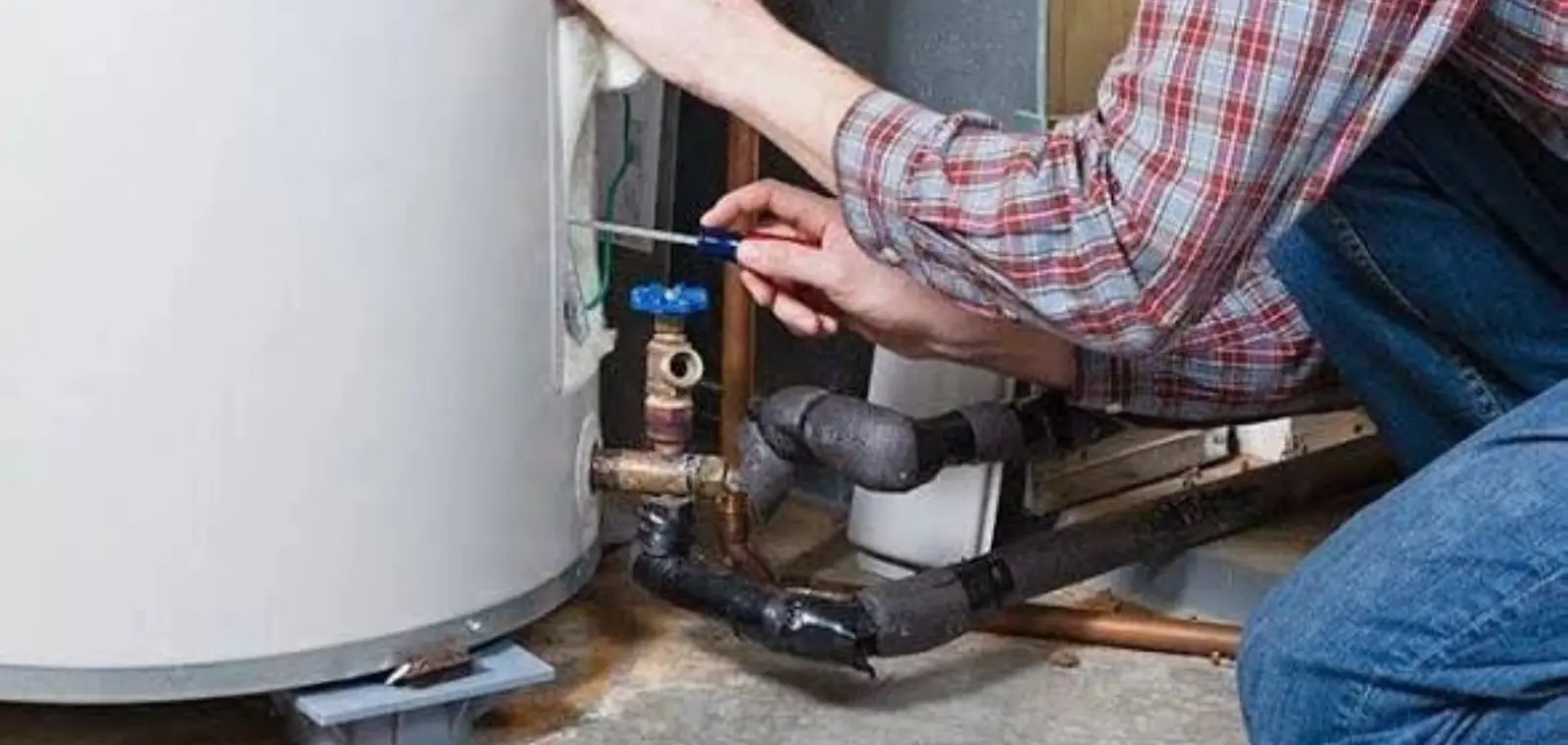
If an electric water heater gives lukewarm water, runs out too fast or trips its reset button, a failed thermostat is one of the likeliest causes. The part is small and cheap compared with the heater, and a careful homeowner can replace it. The job also involves live power and a metal tank full of water, so the safe path is to test first and call a plumber if anything is unclear.
How the thermostat works
An electric tank has two heating elements, one near the top and one near the bottom. Each has its own thermostat. The upper thermostat has a built-in high limit switch, the red reset button. It trips if the water gets too hot. The upper thermostat also decides which element runs, so a failure in it can leave the whole tank cold or only half warm.
When the water is warm but not hot, the lower thermostat or element is suspect. When the water is cold, the upper thermostat, the high limit switch or a tripped breaker is more likely. This difference is the first clue, and it saves you from replacing a part that works.
Check these before buying a part
- The breaker for the heater is on, and has not tripped
- The red reset button on the upper thermostat has been pressed once
- The thermostat dial is set to a sensible temperature and not turned down
- The water has had time to heat after the last reset
A tripped breaker or reset button is a symptom, not the cause. If the breaker trips again, something is drawing too much current. That points to a shorted element or loose wiring, and a plumber should look at it. Do not reset a breaker over and over.
Turn the power off first
Switch off the breaker at the panel and confirm it. Remove the access panel and the insulation behind it. Use a non-contact voltage tester on the wires, and check that the tester works by trying it on a live outlet first. Only when it reads dead on every wire is the heater safe to touch. This is the step that matters most in the whole job.
Electric water heaters often run on a 240 volt circuit with two live legs. Switching off one leg is not enough. If the breaker is a double pole, both legs go off together, and the tester still has to confirm it.
Testing the parts
| Part | What you check | What a bad result looks like |
|---|---|---|
| Upper thermostat | Continuity with a multimeter | No continuity when the dial is above the water temperature |
| Lower thermostat | Continuity with a multimeter | No continuity when it should be calling for heat |
| Heating element | Resistance across its two screws | Reads open or reads zero |
| High limit switch | Reset button pressed once | Trips again right away |
A multimeter that can read resistance and continuity is the only tool you need to test. If you do not own one or are not sure how to use it, this is a good place to stop. The water heater repair team does these tests every day and can usually finish on the first visit.
Replacing the thermostat
Photograph the wiring before removing anything. Disconnect the wires, slide out the old thermostat and clip the new one into the same bracket, flat against the tank. Contact with the tank wall is what lets it sense the water temperature, so a loose fit gives wrong readings. Reconnect the wires exactly as they were, close the insulation, fit the panel and then restore power.
Set the new dial to a moderate temperature. A common recommendation is to keep the setting low enough to avoid scalds. Wait for the tank to heat fully before you judge the result. A big tank can take a long time to recover.
When to stop and call
Reasons to hand the job to a plumber
- The breaker trips again after one reset
- The wiring is burnt, brittle or melted
- Water is leaking from the tank or the element gasket
- The heater is old, rusted or rumbling
- You cannot confirm the power is off
A tank with a leaking seam cannot be repaired, and a thermostat will not fix it. If your heater is also making a rumbling noise, sediment may be involved, and the water heater replacement page explains when a new tank is the better value.
What a new thermostat will not fix
A thermostat does not fix a tank that has sediment, a failed element or a leak. If the new part does not bring back hot water, test the elements before buying anything else. A tank that is old and rusted may fail in a few weeks regardless of the part you put on it. Weigh the repair against the age of the heater and the cost of a new one before you spend more.
Write the install date on the tank with a marker after any repair. A record of what was replaced and when helps the next person who works on it, and it helps you decide when to stop repairing and start planning a replacement.
A Hilliard note: hard water and the thermostat
Columbus supplies Hilliard homes with water that it softens to an average of 120 parts per million, about 7 grains per gallon. That is moderately hard. Scale forms on heating elements and settles at the bottom of the tank, which makes the lower element work harder and fail sooner. If your heater is more than ten years old and the lower element keeps failing, sediment is a likely cause, not the thermostat.
A tank flush once a year slows that buildup. If the drain valve is clogged with scale, stop and call a plumber instead of forcing it.
The same advice applies to homes in Dublin, which share the same water supplier. If you are there and unsure, the Dublin plumber page shows how to reach us.
Code references for this work
Thermostat and element wiring falls under the National Electrical Code (NEC). The tank's relief valve and discharge pipe follow the International Plumbing Code (IPC) that Ohio's plumbing code is based on.
Questions we hear from callers
The button trips when the water gets too hot or when a thermostat or element has failed. If it trips again after one reset, call a plumber.
Test with a multimeter with the power off. A thermostat is tested for continuity, an element for resistance. Warm but not hot water often points to the lower element.
No. A gas heater uses a gas control valve and a thermocouple, not these parts. If you smell gas, leave the building and call the gas utility.
It can. Columbus describes its water as moderately hard, and scale on an element makes it run hotter. Annual flushing helps slow it.