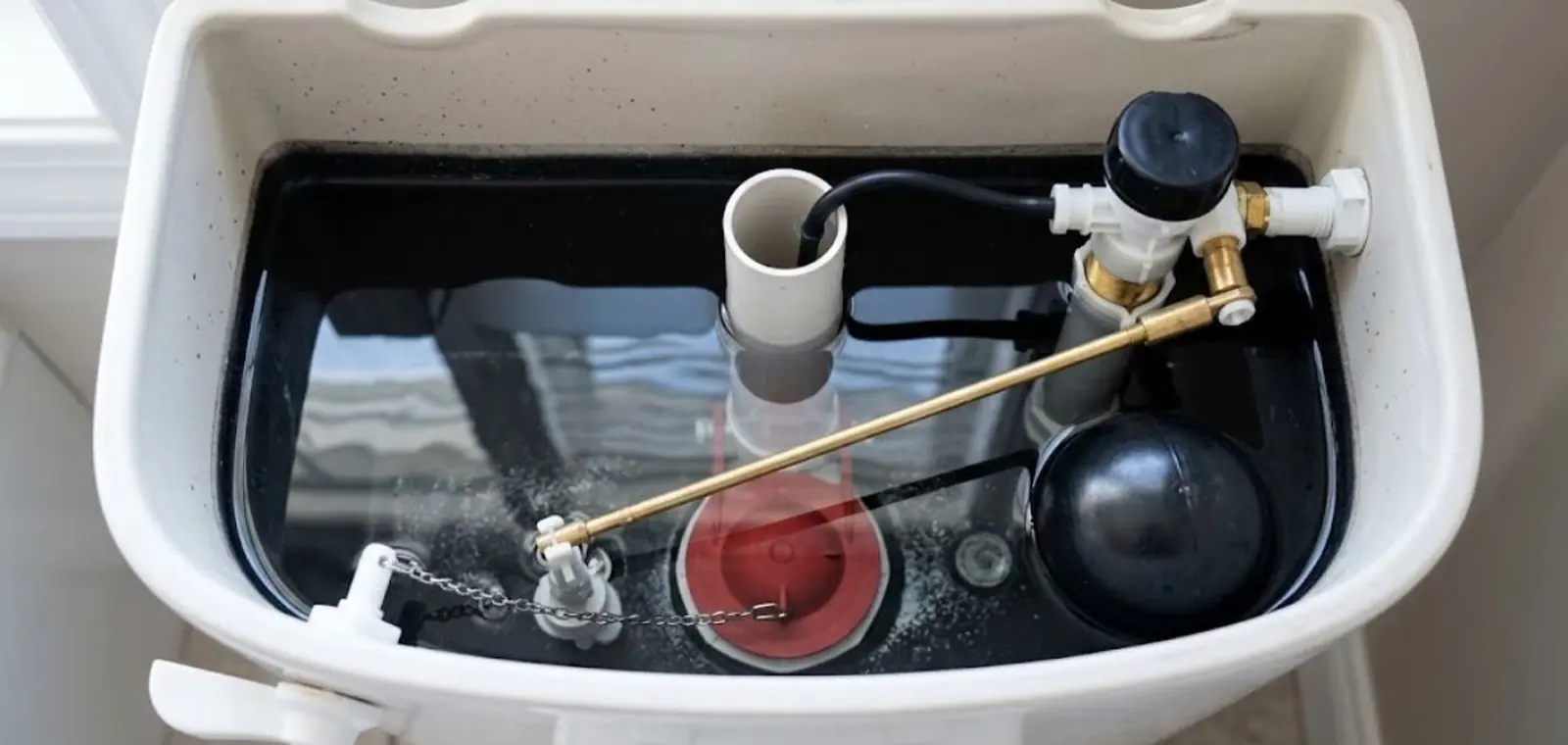
A dye test is the quickest way to learn whether a toilet is leaking from the tank into the bowl. A few drops of food coloring, ten minutes of waiting and a look at the bowl will tell you. It is one of several checks worth knowing, because a silent leak can add to a water bill for months before anyone sees it.
How the toilet dye test works
Take the lid off the tank and add several drops of dark food coloring or a dye tablet. Do not flush. Wait ten to fifteen minutes, and then look in the bowl. If color has appeared there, water is passing from the tank into the bowl without a flush, and the flapper is not sealing.
Clean water in the bowl means the flapper holds. The leak you are chasing is somewhere else. The test takes a minute to set up and costs almost nothing, which is why plumbers do it first.
What a failed test means
- The flapper is worn, warped or coated with mineral scale
- The flush valve seat is pitted or scaled
- The chain is too short and holds the flapper slightly open
- The fill valve is set too high and water runs down the overflow tube
A new flapper is an inexpensive part and the swap takes a few minutes. Turn off the shutoff valve, flush to empty the tank, remove the old flapper from its pegs and fit the new one. Match the style to your toilet. If a new flapper does not stop the leak, the seat is damaged. A toilet repair visit can replace the valve.
Second check: the meter test
To check the whole house, turn off every tap and appliance. Find the water meter and look at the small dial or triangle that spins when water moves. If it turns while nothing is on, water is going somewhere. Note the reading, wait an hour without using water and check again. A change means a leak between the meter and the fixtures.
| Check | What it finds | What it misses |
|---|---|---|
| Toilet dye test | Flapper and seat leaks | Leaks in walls or underground |
| Meter test | Any leak on the house side | Where the leak is |
| Visual look under sinks | Slow drips at joints | Leaks inside walls |
| Water bill history | A change over weeks | The cause |
Third check: look for the signs
Where hidden leaks tend to show
- A damp, musty smell in a closed room or the basement
- A ceiling stain that grows after the shower runs
- Warm patches on a floor over a hot water line
- Peeling paint or bubbling drywall near a bathroom
- The sound of water when everything is off
If the meter moves and the toilet is clean, the leak is in a supply line, a fixture or underground. At that point guessing costs more than looking. A plumber can use listening equipment, thermal imaging or pressure testing to find the spot, often without opening the wall until the location is known. The leak detection page explains what the visit involves.
What not to do
Do not cut into a wall or a ceiling on a hunch. A stain on a ceiling can be several feet from the source, because water travels along framing before it drips. Cutting in the wrong place makes extra repair work and may not find the leak.
Do not ignore a leak because the bill looks small. Moisture rots framing and feeds mold, and the damage is often worse than the water cost. If an electrical outlet or a light fixture is wet, stay clear and shut off power from a dry spot, or call for help.
Leaks outside the walls
Not every leak is inside the house. A line between the meter and the foundation can leak underground, and the clue is often a soggy patch of lawn that stays wet in dry weather, or a drop in pressure with no stain indoors. Look for a spot where grass is greener or the ground is soft. A plumber can locate the line and pressure test it before any digging starts.
An irrigation system or an outdoor spigot can also leak. Close the spigot valve inside the house, if there is one, and watch the meter again. If the dial stops, the leak was outdoors.
Fixing what the dye test shows
If the dye appears in the bowl, the fix is usually short. Shut off the supply, flush the tank and inspect the flapper. A flapper that feels slimy or warped should be replaced. Clean the seat with a soft pad, not a harsh scraper, and test again with fresh dye. If the flapper is new and the dye still appears, the seat needs work.
Run the test again a day later to make sure the repair held. Some leaks are intermittent, and a first clean result can be misleading. If you have more than one toilet, test each one, since the same age and water conditions wear parts at the same pace.
A Hilliard note: the meter is yours to read
Columbus is replacing meters at some Hilliard properties under its Enhanced Meter Project, which began in mid-June 2026. Most meters are indoors, installation is free and water can be shut off for a short time during the swap. After any meter work, glance at the connections for drips and watch the dial with every tap closed.
A spinning dial with everything off is the test described above. It is the first thing a plumber will ask you about.
The same checks apply in Dublin, which shares the same water supplier. The Dublin plumber page explains how to book a visit if the checks point to a leak.
After the leak is found
Fix the source, then dry the area quickly. Fans and a dehumidifier help, and wet insulation or drywall may need to come out. Take photos for your insurer before cleanup. If the leak was inside a wall, ask the plumber to document what they found, since that supports a claim.
Code references for this work
Toilet flush valves and fill valves are made to plumbing product standards, and the fixture is set up under the International Plumbing Code (IPC), the model code behind Ohio's plumbing code.
Questions we hear from callers
Ten to fifteen minutes is usually enough. Do not flush during the test.
Yes, if every fixture and appliance is off. A spinning dial with nothing running means a leak. An ice maker or a softener that recharges can cause a false reading.
You can notice signs such as warm floor spots. Finding the exact point takes equipment, and a plumber can do it without breaking up the slab first.
Most Hilliard meters are indoors. Close every tap and watch the dial. If it moves, there is water going somewhere.