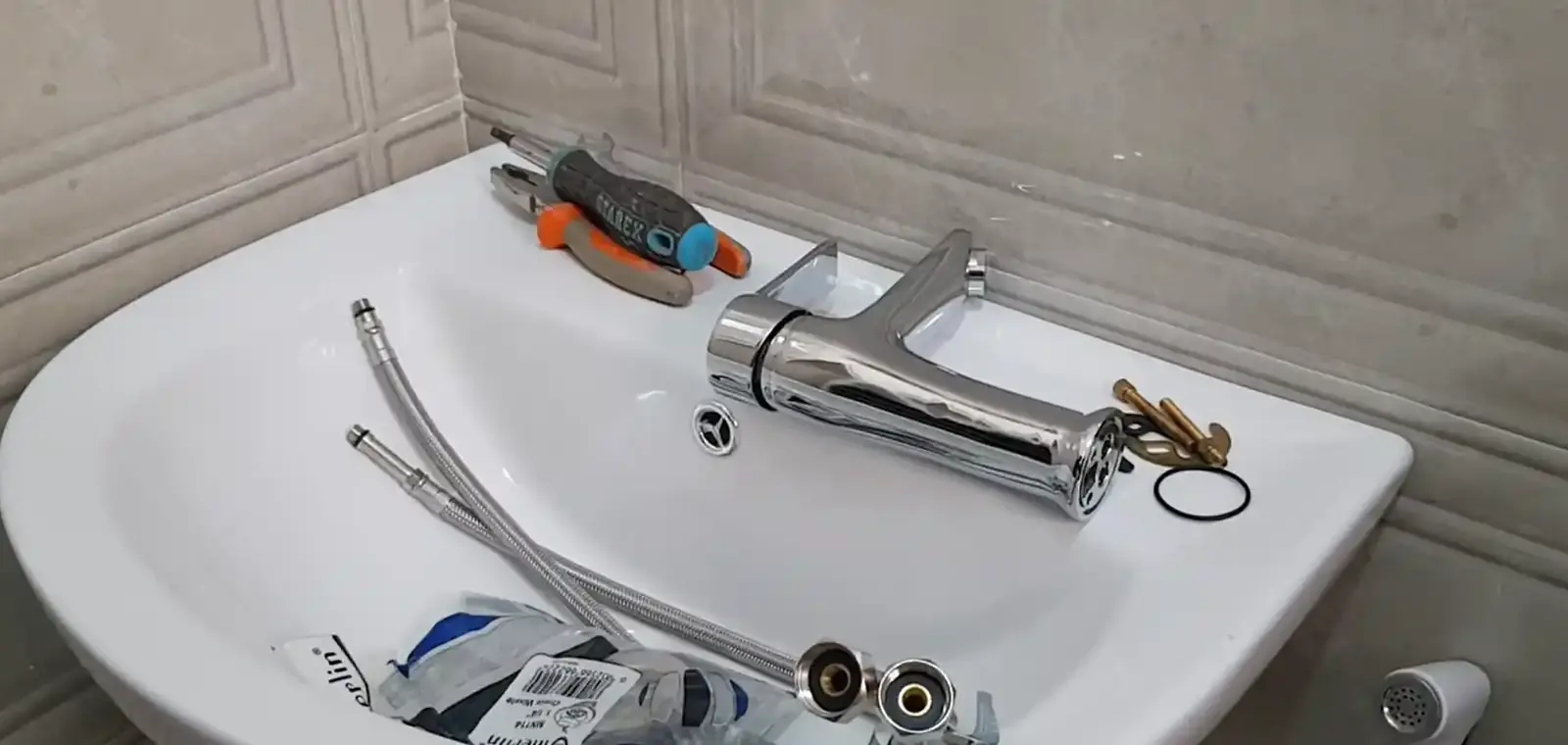
Plumbing a sink means connecting two supply lines to the faucet and one drain line to the trap. The steps are the same for a bathroom or kitchen sink, with a few extra parts in the kitchen. This guide explains the order and the places where leaks start.
What you need
- Two braided supply lines sized for the faucet
- A P-trap kit with slip nuts and washers
- Plumber's tape for threaded joints that call for it
- An adjustable wrench, a bucket and a flashlight
Turn off the water at the shutoff valves under the sink first. If there are no valves, turn off the main and open the faucet to drain the lines. Putting in a valve at that point is a good time to bring in a plumber.
Step one: the faucet and supply lines
Mount the faucet to the sink or counter before the sink is set in place. It is much easier on a bench. Then connect a braided supply line to each faucet inlet. Hand tighten, then add a quarter turn with a wrench. Over-tightening cracks washers and starts leaks.
Connect the other ends to the shutoff valves. Hot is on the left and cold on the right. The faucet will be marked the same way. Open the valves slowly and check every joint with a dry paper towel.
Step two: the drain and the trap
The drain starts with the strainer in the sink, sealed with plumber's putty or a gasket. A tailpiece drops from it. The P-trap connects the tailpiece to the wall drain. The curved trap holds a little water, and that water blocks sewer gas from rising into the room.
Fit the pieces loosely first. The trap must slope slightly down toward the wall and must not be forced. If the pieces do not line up, trim the tailpiece. Do not stretch the trap with excess force, since a strained trap leaks.
| Spot | Cause | Fix |
|---|---|---|
| Under the faucet | Loose supply line nut | Snug with a quarter turn |
| At the trap | Slip nut not tight or washer misplaced | Reseat the washer and tighten by hand |
| Under the strainer | Putty not sealed | Remove and reseal |
| At the wall | Drain pipe not seated | Check the connection |
Step three: the test
Open the valves, run the water and check every joint with a dry paper towel. Fill the sink and then let it drain fully, since a full sink puts more pressure on the trap than a trickle does. Check again after ten minutes and the next morning. A small drip left alone will damage the cabinet over weeks.
The kitchen extras
A kitchen sink may have a double basin, a garbage disposal and a dishwasher connection. A double basin needs a tee or a continuous waste to join the two drains. A disposal replaces one of the strainers and has its own outlet. The plumbing installation page covers planned fixture jobs.
Venting matters too. A drain that gurgles has a vent problem, and the fix may be inside the wall. That is not a do-it-yourself repair.
When to hand it to a plumber
Signs the job is beyond a simple swap
- The shutoff valves are old and will not close
- The drain is in a different spot than the new trap
- The pipe is galvanized, corroded or brittle
- There is a gurgle or a slow drain after the swap
- You are moving the sink to a new wall
Moving a sink means moving supply and drain lines, and often a vent. It may also need a permit. A faucet repair visit is a good fit for a failed valve or a dripping faucet. Anything that opens a wall should be planned.
Choosing parts that last
Braided stainless supply lines last longer than plain vinyl ones and are easier to bend into tight cabinets. Match the length to the run, with a gentle loop and no kinks. A line that is too short pulls on the valve and a line that is too long can kink. Buy the trap kit to match the pipe size, which is commonly 1.25 inches for bathrooms and 1.5 inches for kitchens.
Choose a shutoff valve with a quarter turn handle if you are replacing old ones. They are quicker to close in an emergency, and they are less likely to seize. If your old valves are stiff, replacing them while the sink is apart is the cheapest time to do it.
Common mistakes to avoid
The most frequent mistake is overtightening. Plastic nuts strip and washers crush when they are cranked hard, and a joint that is snug usually seals. The second is mixing parts from different kits, which have slightly different thread and washer shapes. The third is leaving the trap too low or too high so that water sits in the line.
Another trap is reusing old washers. They harden over the years and no longer seal. Buy a fresh set and replace every washer you disturb. Finally, do not skip the test. Many leaks are found on day two, when a joint that looked dry weeps under the weight of a full sink. Check again before you load the cabinet.
A Hilliard note: permits and older houses
The City of Hilliard's Building Standards Division states that plumbing work needs a permit, and that every contractor working in the city must be registered with the Building Department. A like-for-like faucet swap is usually minor, but moving drains is not. Ask the division before you start.
Houses from the 1950s and 60s may have galvanized supply lines that are corroded inside. If the shutoff valves under the sink are stiff or the water pressure is weak, the problem may be behind the wall.
If you are in Dublin, our crews take calls there as well, as the Dublin plumber page explains.
Questions we hear from callers
No. Braided lines seal with rubber washers. Tape is for threaded metal joints that call for it.
A gurgle often means the drain is not vented properly. It is a problem in the wall and needs a plumber.
Yes, if the shutoff valves work. If they do not, turn off the main.
The city says plumbing work needs a permit and rules differ by project. Ask the Building Standards Division before you start.