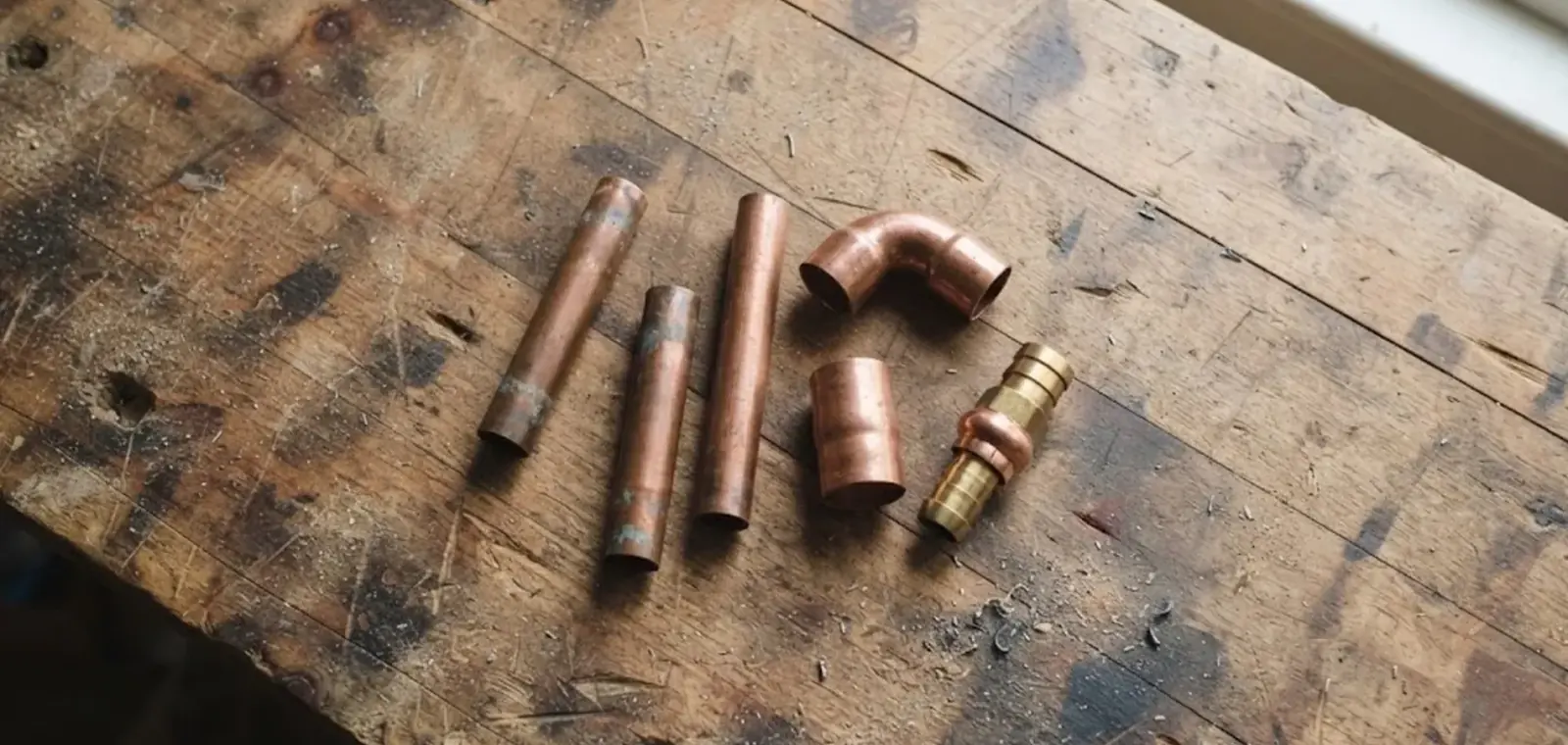
A compression fitting joins pipes without heat or solder. A nut and a small ring, called a ferrule, squeeze onto the pipe and seal against the fitting body. It is the fitting most homeowners can install with two wrenches. It also has limits, and using it in the wrong place leads to a leak behind a wall.
Where compression fittings belong
- Shutoff valves under sinks and toilets, where the line ends in a fixture
- Supply lines to faucets and appliances
- Quick repairs where soldering is dangerous, such as near wood or insulation
- Places that need to be taken apart again later
They are less suited to hidden joints inside walls and ceilings. A compression joint can loosen over years of temperature swings and vibration. A soldered joint, when done properly, is permanent. For anything buried in a wall, plumbers generally prefer a soldered or crimped joint.
Parts of a compression fitting
| Part | Job |
|---|---|
| Compression nut | Pulls the ferrule tight as it is screwed on |
| Ferrule or olive | Deforms to grip the pipe and seal |
| Fitting body | Holds the seat the ferrule presses against |
| Pipe | Must be round, smooth and cut square |
The ferrule is a one-use part. It is crushed into the pipe the first time you tighten it, and it takes on that shape. Take the joint apart and the same ferrule often will not seal again. Replace it with a new one every time.
Installing one correctly
Turn off the water and drain the line. Cut the copper square with a tubing cutter, since a hacksaw leaves a ragged edge that will not seal. Remove the burr inside and out, and wipe the pipe clean. Slide the nut on first, then the ferrule, then push the pipe fully into the fitting until it stops.
Tighten the nut by hand, then one more turn with a wrench while holding the fitting body with a second wrench. Stop there. Overtightening is the most common error, and it cracks the ferrule or deforms the pipe. Turn the water on slowly and check with a dry paper towel.
What causes a compression leak
Common reasons the joint weeps
- The pipe end was cut at an angle or has a burr
- The ferrule is reversed or damaged
- The nut was overtightened or undertightened
- The pipe is scratched or out of round at the seat
- The fitting is old and the seat is corroded
If a joint drips, try an eighth of a turn on the nut. If it still drips, take it apart, inspect the ferrule and the pipe and rebuild with a new ferrule. Wrapping the threads in tape does not help here. The seal is at the ferrule, not the threads.
Compression versus other joints
| Type | Strength | Best for |
|---|---|---|
| Compression | Good at accessible locations | Valves and fixtures |
| Solder | Permanent when done right | Joints in walls and long runs |
| Press fitting | Fast and clean, needs a tool | Production plumbing work |
| Push to connect | Fast, no tools | Quick repairs and temporary fixes |
Push-to-connect fittings are popular for quick repairs. They work with copper, and some work with plastic as well. They are convenient, and they cost more than compression fittings. Plumbers use them where soldering is hard, but permanent buried joints are still best made by a skilled hand.
Reading the pipe before you buy parts
Copper pipe comes in more than one size and wall thickness, and the fitting must match. The nominal size on a fitting is not the same as the outside diameter of the pipe, so measure the outside of the copper and match the fitting by that. If your tape measure is not precise enough, take a short piece of the old pipe to the store and compare it with the fittings on the shelf.
Look at the pipe for discoloration, flaking or green crust. Those signs tell you the copper is wearing from the inside or the outside. Pipe in good shape feels smooth and solid and has an even color. Pipe with pits or thin walls should be cut back until it is sound, and if there is more than a short stretch of bad pipe, a longer repair or a repipe may serve you better than patching.
Keep spare nuts and ferrules in your toolbox. The part you need is never in stock at the hour the line fails, and a small bag costs very little. Label it with the pipe size. If you ever need to shut off the water in a hurry, you will be glad to have it.
A Hilliard note: older copper and fresh joints
Houses in Hilliard from the decades after the 1950s may have copper that is now old. Old copper can be thin or pitted at the end, and a compression fitting on bad pipe will leak no matter how well you tighten it. Cut back to solid pipe before making the joint.
The City of Hilliard's Building Standards Division states that plumbing work needs a permit, so ask the division whether a repair of this size is covered.
When to hand it to a plumber
If the pipe is corroded for more than a few inches, if the shutoff will not close or if the joint is inside a wall, call a plumber. A hidden joint that fails can flood a floor, and the right repair may involve cutting out a section of pipe. The water line repair page covers service line problems, and the burst pipe repair page covers urgent ones.
Crews serve Dublin as well. See the Dublin plumber page for how to reach us.
Tools worth having
A tubing cutter, a deburring tool and two adjustable wrenches handle nearly every job. Add a small bucket and towels for the water that stays in the line. A flashlight and a mirror help in tight cabinets. Buy the cutter sized for the pipe, as the usual household sizes are cut with the same small tool.
Questions we hear from callers
It is better not to. The ferrule deforms the first time it is tightened and often will not seal again.
It is better to avoid it. A hidden joint that loosens is hard to find. Plumbers prefer soldered or crimped joints inside walls.
No. The seal is at the ferrule, not the threads.
The city says plumbing work needs a permit, and rules differ by project. Ask the Building Standards Division.