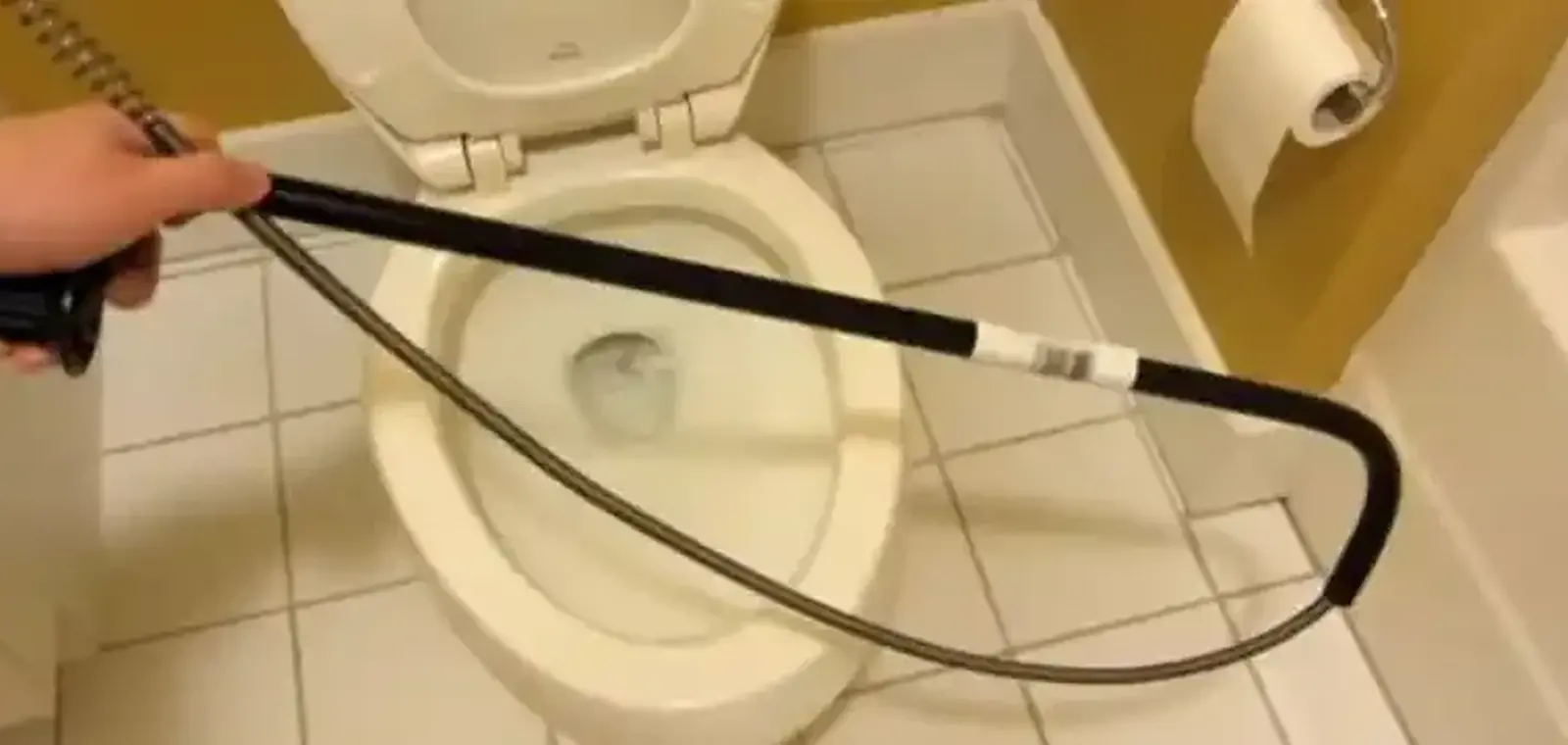
A clogged toilet with no plunger in the house is stressful, but you have options. Hot water, dish soap and a bit of patience clear most simple clogs. The methods below start with the gentlest and stop at the point where you should call a plumber.
First, stop the water
Do not flush again. If the bowl is rising, take the tank lid off and lift the flapper or push the float down to stop water refilling. You can also close the shutoff valve on the wall behind the toilet by turning it clockwise. This keeps the bowl from overflowing while you work.
Put down towels and wear rubber gloves. If the water is clear, an overflow is a mess. If it is dirty, it is also a health risk, so keep children and pets away.
Method one: hot water and dish soap
Squirt a generous amount of dish soap into the bowl and let it sit for several minutes. The soap lubricates the clog. Then pour a bucket of hot tap water from waist height. Hot is not boiling. Boiling water can crack porcelain, so use water that is hot from the tap or warmed on the stove and then allowed to cool a bit.
Wait several minutes. If the water level drops, flush once to test. If it does not drop, repeat once, then move to another method. Pouring more water into a full bowl only makes the overflow worse.
Method two: a wet-dry vacuum
If you have a wet-dry shop vacuum, set it to wet mode, put the hose in the bowl and seal the opening with a towel. Suction pulls the clog loose. Do not use a regular household vacuum. It is not made for water and can be dangerous.
Method three: a hanger or a toilet auger
A toilet auger is the right tool, and many hardware stores sell one. If you do not have one, a straightened wire hanger with a rag wrapped around the end can reach a clog sitting just past the trap. Work gently to avoid scratching the porcelain. Wire pushed hard can also lodge in the trap and make things worse.
| Do | Do not |
|---|---|
| Use hot tap water and dish soap | Pour boiling water into the bowl |
| Use a toilet auger or a wet-dry vacuum | Use a household vacuum or a power drill |
| Turn off the shutoff valve | Keep flushing to see if it clears |
| Wear gloves and protect the floor | Mix drain cleaners in the bowl |
Why drain cleaner is a bad idea
Chemical drain cleaners are not made for toilets. They can sit in the bowl without reaching the clog and then splash on the next person to plunge or work on it. They can also damage the finish and older pipes. If you have used one, tell the plumber before they start so they can protect themselves.
Signs it is not the toilet
- Other fixtures gurgle or drain slowly at the same time
- The tub or shower backs up when you flush
- A basement floor drain bubbles or smells
- The clog returns after a day or two
Those signs point to the main drain, not the bowl. A cable through the toilet will not fix a blocked main line, and it can push waste back through lower drains. The drain cleaning page explains how a plumber finds the location, and the toilet repair page covers bowls that keep clogging or running.
What to do after it clears
Once the bowl drains, flush once and watch the full cycle. A healthy flush pulls water out of the bowl quickly and refills it to the line. If the bowl rises, drains slowly or gurgles, part of the clog is still there. Do not leave it for tomorrow, because a half-cleared line clogs again fast.
Wash your hands and any tools with soap. Disinfect the floor around the toilet, especially if water overflowed. Let towels dry in a place that is not the living space, and wash them hot.
What a plumber does differently
A plumber uses a closet auger, which has a long flexible cable with a protective sleeve that does not scratch the bowl. It reaches past the trap and breaks up or retrieves the blockage. If the cause is a toy, a brush head or a solid item, an auger often pulls it back out. When that fails, the toilet can be lifted off the floor so the line can be reached from below.
Keeping a small kit at home
A plunger is cheap, and a closet auger is not much more. Keep both where you can reach them, with a pair of rubber gloves and a bottle of dish soap. A flange plunger, which has a rubber lip that seats in the drain, works better on toilets than the flat cup type made for sinks. Having the right tool turns a stressful moment into a two minute job.
Teach everyone in the house where the toilet shutoff is. Showing a teenager or a guest how to lift the float and close the valve prevents most floods. If you manage a rental, put the instructions on a card in the bathroom cabinet. A clear plan matters most when the person standing there is alone and worried.
A Hilliard note: backups and the city line
The City of Hilliard runs a Sanitary Backflow Program and asks homeowners who suspect a sewer backup through a floor drain to call its Operations Department at (614) 334-2367. If sewage comes up in a basement floor drain at the same time as a toilet clogs, treat it as a main line problem and not as a toilet problem.
Stop using water in the house, then call both the city number and a plumber.
Keep it from happening again
Most toilet clogs come from too much paper or from items that do not break down. Wipes labeled flushable are a common cause of clogs further down the line. A toilet that clogs often can have a partial blockage, a weak flush or a problem with the vent. Those are fixed by a plumber, not a plunger.
If you are in Dublin and the problem keeps returning, the Dublin plumber page shows how to call for a visit.
Code references for this work
Toilet and drain design follows the International Plumbing Code (IPC), the model code Ohio's plumbing code is based on, which is why a repeat clog can point to a vent or slope fault.
Questions we hear from callers
It is gentle, but it rarely clears a real clog. Hot water and dish soap work better.
It can. Porcelain can crack when heated suddenly, so use hot tap water, not boiling.
Call if two methods fail, if other drains are slow or if sewage comes up anywhere in the house.
The city asks homeowners to call its Operations Department at (614) 334-2367. Call a plumber too, to clear and inspect the line.