A leak that you cannot see is one you have to search for. This guide walks through the house in a sensible order, kitchen to basement, and explains what each sign means. Finding a leak early keeps a small repair from turning into a rebuilt ceiling.
Start with the signs that are easy to see
- A water bill that rose with no change in how you use water
- A musty smell in a room that stays closed
- Paint that bubbles, drywall that softens or wallpaper that peels
- Warm spots on a floor, or a hissing sound with everything off
Bills are a quiet clue. Compare this month's use against the same month last year, since use changes with the season. A jump with no explanation deserves a look. If your meter test shows movement with all taps off, the leak is real. The leak detection page explains what to do next.
Kitchen
Open the cabinet under the sink and run your fingers along every connection. Feel for damp or a mineral crust at the joints. Check the dishwasher supply and the drain hose, and the ice maker line if there is a fridge nearby. Pull the fridge out if you can, since small supply lines leak behind it for months.
Bathrooms
Look around the base of the toilet for a soft floor or a dark ring. Check the grout and caulk around the tub and shower, since failed seals let water into the wall below. A shower pan that leaks stains the ceiling in the room under it. Run the shower for ten minutes and look below.
Laundry and water heater
Washing machine hoses fail without warning. Look at the connections behind the machine, and replace rubber hoses with braided ones. Near the water heater, check the pressure relief pipe, the drain valve and the inlet and outlet. A tank with rust streaks at the bottom is on its way out.
| Where | What to look for |
|---|---|
| Under sinks | Dampness, mineral crust and a musty smell |
| Behind appliances | Water marks on the floor and soft flooring |
| Ceilings | Stains that grow, sagging or drips |
| Basement walls and floors | Dark patches, efflorescence and puddles |
| Outdoors | Wet patches, sunken ground and a spigot that drips |
Ceilings and walls
A ceiling stain tells you the water arrived there, not where it began. Water runs along framing and drops at a low point. If the stain is below a bathroom, check the supply and drain in that bathroom. If it is below a roof, check for roof leaks, which are not plumbing. A stain that grows only when it rains is the roof.
Basement and crawl space
Look at the pipes along the ceiling, especially at joints. Drips fall onto the floor in a line. Feel for damp insulation. Check the sump pit and the floor drain. A strong sewer smell with a wet floor drain is a different problem, and it needs a plumber right away.
When to stop looking and call
- The meter moves with everything off and you cannot find the source
- A stain or soft spot is spreading
- You hear water inside a wall
- The floor is warm in one spot
- Any outlet or fixture is wet
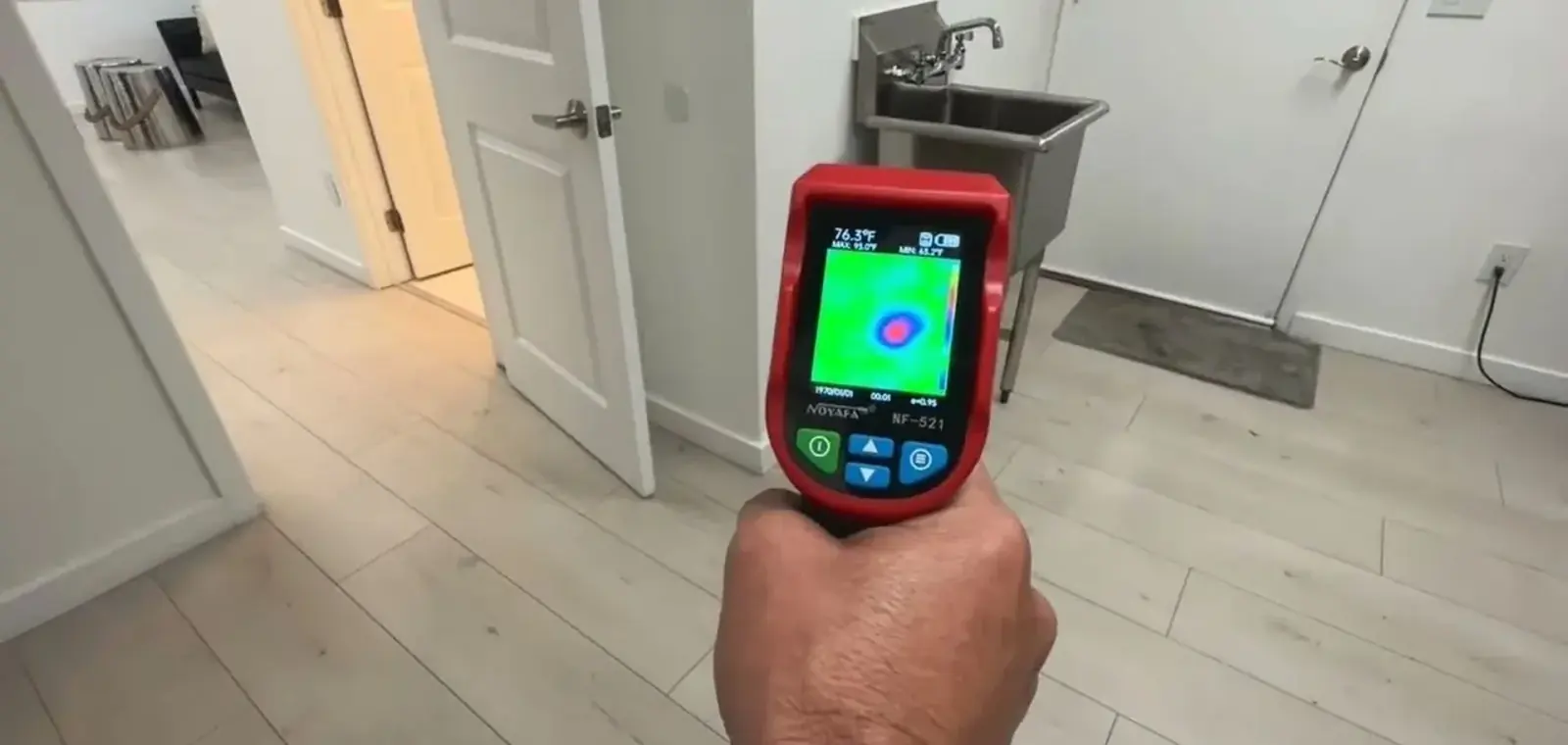
Hidden leaks inside walls and under slabs need equipment. A plumber can use acoustic listening gear, thermal imaging and pressure testing to find a leak, often before opening a wall. This is cheaper than guessing and cutting. If the leak is bursting now, see the burst pipe repair steps.
Using your senses and a few simple tools
Your ears are the first tool. Switch off the radio, the television and the dishwasher, close the doors and walk through the house quietly. A hiss near a wall or a floor, a tick that repeats or the sound of running water when nothing is on points to a leak. A mechanic's stethoscope or even a glass held to a wall can help you narrow it down.
A flashlight held flat against a wall or ceiling shows ripples and dark patches that are hard to see in normal light. A piece of dry toilet paper pressed to a suspect joint turns damp quickly and shows a slow drip that your eyes would miss. Moisture meters are sold at hardware stores, and they read the dampness of drywall and wood. Use them to map the edge of a wet area, and mark it with a pencil so you can see whether it grows.
Keep notes. Write down what you saw, when and what the meter read. A plumber can use that record to start in the right place, and your insurer will want it if there is a claim.
A Hilliard note: meter swaps and basement meters
Columbus is replacing meters at some Hilliard properties under its Enhanced Meter Project, which began in mid-June 2026. Most meters are indoors and installation is free. The meter sits in the basement or utility area in many Hilliard homes, so you can watch it without leaving the house.
After any meter work, check the connections for drips. Water can be shut off briefly during the swap, and a connection that was disturbed may weep.
What to do once you find it
Shut off the water to the fixture if there is a valve. If not, close the main. Dry the area and take photos for your insurer. Do not paint or patch over a stain until you are sure the leak is fixed. Staining returns if the source is still wet.
If the leak is on a supply line, a plumber can repair it without damage to the rest of the house. For a Dublin address, the Dublin plumber page shows how to book a visit.
Prevent the next one
Replace old rubber hoses, test your shutoff valves once a year and know where the main is. Fix a dripping faucet early. A small drip wastes water and also hints at a worn part. A little attention each season prevents most leaks from turning into damage.
Code references for this work
Repairs after a leak is found must use pipe and fittings that meet the International Plumbing Code (IPC), the model code behind Ohio's plumbing code.
Questions we hear from callers
Use the meter test first, then a plumber can use listening and thermal tools to locate it.
Yes. A running toilet or a small constant leak adds up over a month.
No. It can be a roof leak, condensation or a plumbing leak. Check whether it grows after rain or after the shower is used.
Many meters are indoors, in a basement or utility area. If you cannot find yours, call the water utility.