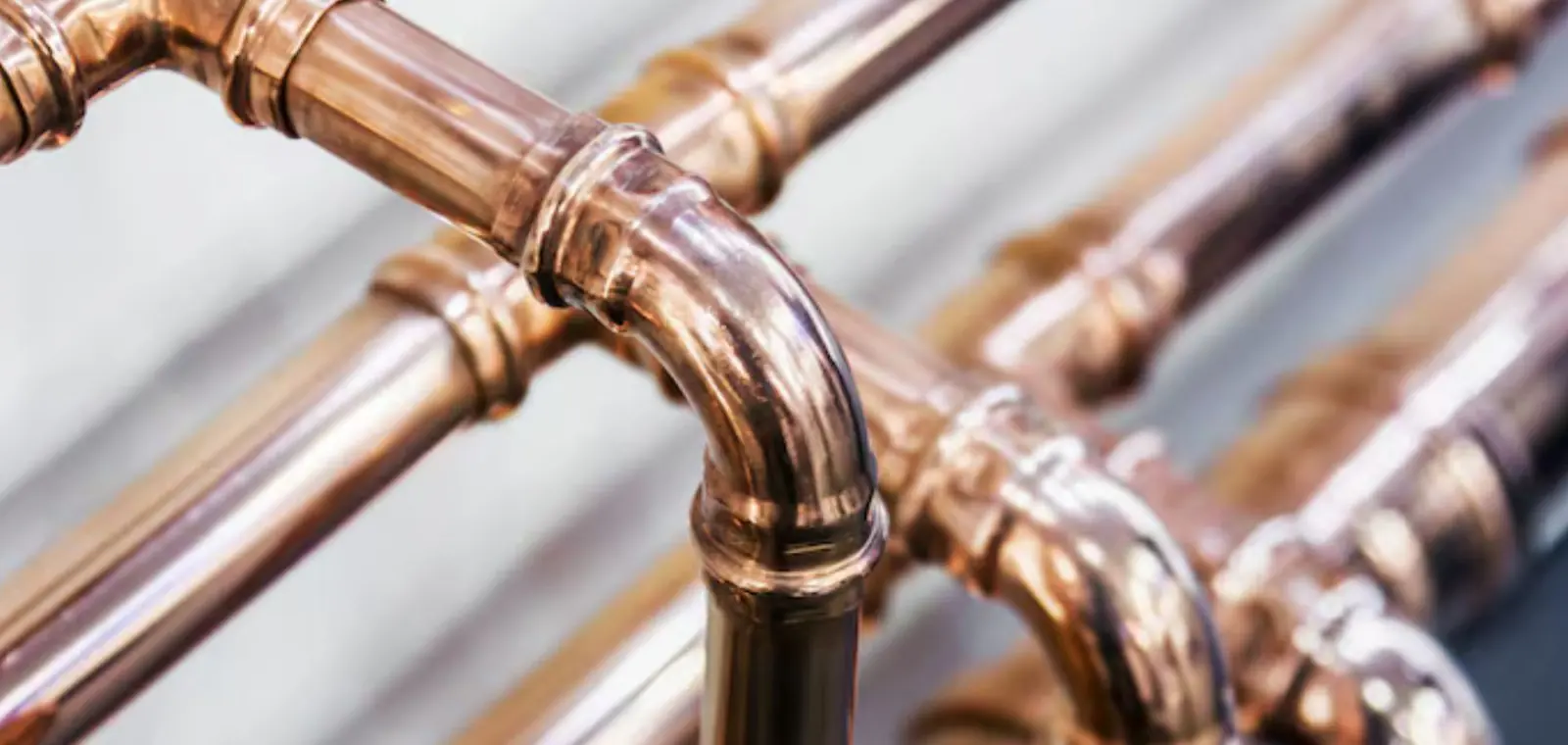
Repiping replaces the supply lines that carry water through a house. Copper is one of the two common materials, and PEX plastic tubing is the other. The price depends less on the pipe itself than on how much of the house must be opened to reach it. This guide explains what drives the price and how to judge whether your house needs a repipe at all.
Why a price cannot be quoted blind
A repipe is priced by the size of the house, the number of bathrooms and kitchens, the access to the framing and the amount of drywall repair afterward. A plumber needs to see the basement, the crawl space and the main water entry before giving a number. Any price printed on a website without that is a guess, so this page prints none.
What is in a repipe quote
| Part | What it covers |
|---|---|
| Materials | Pipe, fittings, valves and hangers |
| Labor | Running the new lines and connecting every fixture |
| Wall access | Cutting and patching drywall where lines must pass |
| Permit | The city's permit and any inspection |
| Cleanup | Disposal of the old pipe and protection of floors |
Drywall repair is the part many owners forget. Whole-house repiping often opens walls in several rooms, and the patching and painting add real time. Some plumbers include basic patching, and others leave it to a drywall contractor. Ask which applies.
Copper or PEX
Copper is durable and has a long record in homes. It resists heat, does not sag and is accepted everywhere. It also takes more labor, because each joint is soldered, and the pipe is rigid. PEX is flexible and quick to run, which lowers labor, and it tolerates freezing better. It does not like sunlight and has its own fittings.
- Copper: long record, rigid, soldered joints, higher labor
- PEX: flexible, faster to install, resists bursting when frozen
- Both: need a permit in Hilliard and a pressure test before the walls close
Neither is better in every house. Copper fits owners who want a traditional material and do not mind the labor. PEX fits when access is hard or speed matters. A good plumber explains the tradeoffs for your house and does not push one by default. The repiping page covers both.
Signs that a house is due
Reasons to ask for a repipe assessment
- Water that runs brown or rusty after sitting
- Pressure that is weak at several fixtures
- Pinhole leaks that keep appearing in different places
- Galvanized steel pipe, which looks gray and has threaded joints
- A history of leaks in several rooms
One leak does not mean a house needs repiping. A single failed fitting can be repaired. A house with leaks in several places, and old galvanized lines that are corroded on the inside, is a different story. At that point each repair buys little time.
Partial repipe versus whole house
A partial repipe replaces the worst section, such as a line to one bathroom or the stretch from the meter to the water heater. It costs less and disrupts less. It can leave older pipe in the walls that will fail later, and mixing metals needs the right fittings to avoid corrosion at the joint.
How long a repipe lasts and how to protect it
A properly installed repipe is meant to outlast the rest of the plumbing in the house. Both materials depend on the water chemistry and the quality of the joints. Water pressure matters too. Pressure set too high strains fittings and fixtures, so a plumber checks the pressure regulator when the main is open.
After a repipe, learn where the main shutoff is and test it twice a year. A valve that is never turned will seize, and it is the valve you need in an emergency. A new line is no excuse for skipping that habit.
Living through the work
A repipe is disruptive, and planning helps. Ask which days the water will be off and for how long. Fill containers for drinking and washing, and arrange for a place to bathe if the job runs over a day. Clear the areas where the plumber will work, including closets, cabinets and the space around the water heater. Cover furniture, since drywall dust travels.
Ask the plumber to flush the new lines before turning every fixture back on, so that debris does not clog aerators. After the work, run each tap for a few minutes, clean the aerators and check for slow flow. Keep the permit paperwork with your house records. A buyer or an inspector will ask for it later, and it shows the work was inspected.
A Hilliard note: the age of the housing stock
The city says three large subdivisions arrived in Hilliard in the 1950s, that the connection to Columbus water and sewer opened the 1960s to development and that the I-270 Outerbelt sparked another wave in the 1980s. Houses from the 1950s and 60s are the ones most likely to have galvanized or older copper lines, while the 1980s wave of homes may have copper that is now past forty years.
The city's Building Standards Division also says plumbing work needs a permit, and that every contractor working in Hilliard must be registered with the Building Department. Ask for the registration before you sign.
Dublin has a mix of older and newer homes, as the Dublin plumber page explains, and the same repipe logic applies there.
Before the work starts
Ask for a written scope that lists which fixtures are included, what happens to the walls and how long the water will be off. Ask where the new lines will run and whether the water heater connections are renewed. A reputable plumber is happy to answer.
Plan for a few days without normal water use. Move valuables out of the work area. For a leak that is active now, close the main and read the burst pipe repair steps first.
Questions we hear from callers
Neither wins in every house. Copper is traditional and durable, and PEX is quicker to install and resists freezing damage. A plumber should explain the tradeoff for your house.
The city's Building Standards Division says plumbing work needs a permit. Confirm the details with the division before work starts.
If the cause is corroded old pipe, often yes. If the cause is the street supply or a failing pressure regulator, no. A pressure test finds out.
It depends on the size of the house. The plumber gives a schedule with the written scope.